What Is Chinese Silver Grass Used For? Mulch to Biofuel
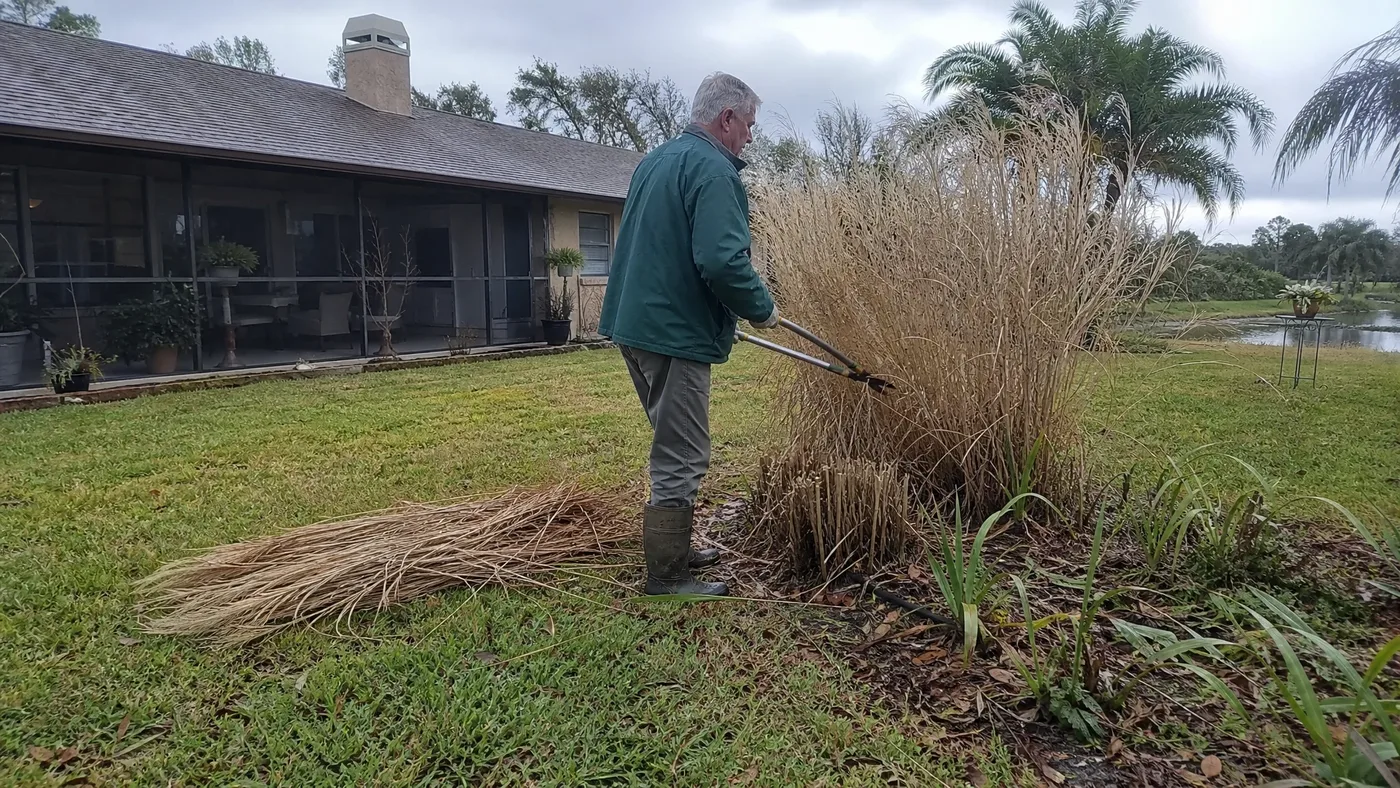
It is late winter, the clump is a tan, rattling heap, and you have just cut it down to stubble. Now you are standing over a pile of canes as tall as you are, wondering whether anything beats hauling them to the curb.
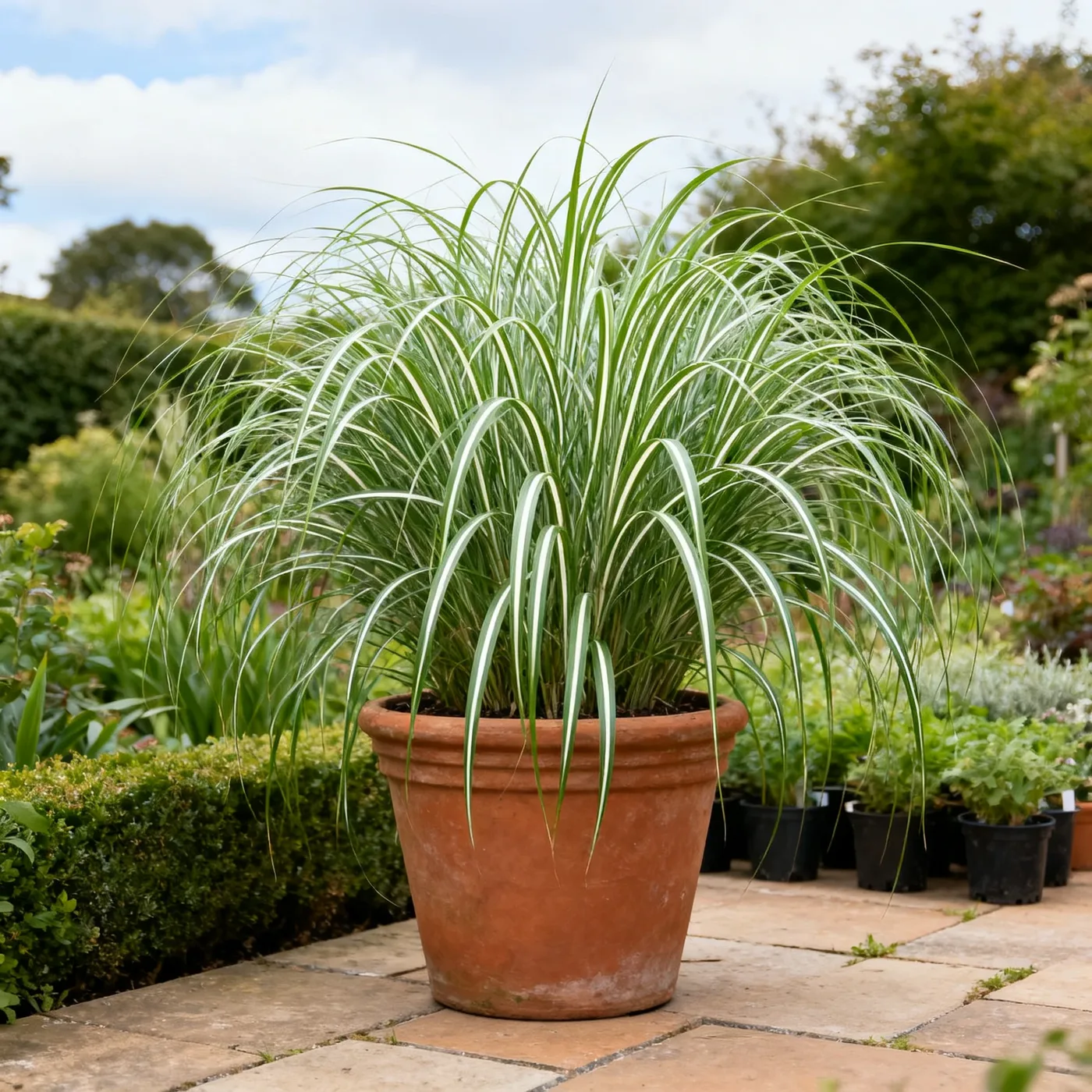
Something does. The stems of Chinese Silver Grass (Miscanthus sinensis 'Gracillimus') are dry, tough and slow to rot, and that is why farms and factories value the genus. We'll walk you through mulch, bedding, pet food and fuel, then sort out which use suits your yard and which tools you need.
Done badly, the pile turns into a mat that starves your beds of nitrogen or a damp heap that rots in the shed. Done right, one clump hands you free material every year.
Cut Stalks of Chinese Silver Grass as Mulch
Mulch is the use we point people to first. It costs nothing, it keeps the material on your property, and it needs only a shredder or a mower.
Shred Before You Spread
Whole canes mat badly and look untidy, so chop them first.
'Gracillimus' stands 5 to 6 feet tall with a spread of 5 to 10 feet, so even one clump gives you a big armful. Its leaves are narrower than the species, so the pieces break into fine, light chips rather than coarse sticks. Cut the canes into lengths you could pick up in a handful, then shred them or run a mower over them on a tarp.
Strip the plumes off first. The species spreads by seed as well as rhizomes, and some cultivars are only assumed to be mostly sterile, so we bag plumes instead of mulching with them. Our guide to spread and removal explains the reasoning.
How Thick to Lay It
Depth decides whether the mulch suppresses weeds or just sits there.
Lay the shreds loose and even, deep enough that you can no longer see bare soil through them. Keep the layer a hand's width back from shrub stems and tree trunks, because heaped mulch stays wet against bark. Fluffy cane settles after rain, so plan on one top-up. Ideal depth shifts with your rainfall and soil, so ask your local extension service for a number that fits your area.
When the Canes Steal Nitrogen
Dry cane is mostly carbon, and that carries one catch.
As microbes break down carbon-rich material, they pull nitrogen from the soil around it. On top of a bed the effect stays shallow and is usually harmless. It bites when you dig the shreds into the soil or pile them around seedlings and vegetables. We often see customers dig cane in "to feed the soil" and then wonder why transplants stall. Leave it on the surface, and if young plants turn pale, read our notes on feeding and side-dress with a nitrogen source.
Bedding for Horses and Small Pets
Chopped miscanthus is sold as animal bedding in places where the crop is grown at scale. Whether your backyard clump should go the same way comes down to three questions.
Absorbency and Dust
Dry stem soaks up liquid reasonably well once it is chopped short, which is the appeal.
The trouble is dust. Any dry, finely cut grass throws it, and the finer you chop, the more you get. The leaf blades of 'Gracillimus' are narrow and sharp edged, so for bedding we would use stems only and discard the blades. Shake the chopped stems outdoors before they go near an animal, and stop if you see a haze when you handle them.
Who It Suits
Bedding from your own clump suits small, short-term jobs.
A rabbit hutch, a hamster cage liner or a chicken coop floor needs a modest amount, and one clump can supply that. Check with your vet before using any new bedding for an animal with breathing trouble. Our guide to pet safety and skin risks covers the leaf edges in more detail.
When to Choose Straw or Shavings
Here is the if-then version.
If you keep a horse, buy straw or shavings. One clump will not bed a stall for more than a short spell, and you cannot guarantee how dusty home-chopped cane is. If the animal is sensitive to dust, buy a bedding made for that species and skip the homemade option. Use your canes for the garden and let bedding come from a supplier.
Why Chinese Silver Grass Turns Up in Pet Food
You may have seen miscanthus on an ingredient label and wondered whether the plant in your border is the same thing. It is related, but it is not the same product.
What the Ingredient Actually Is
A label that lists miscanthus is naming a fiber ingredient.
The University of Minnesota's Miscanthus program describes the genus as a biomass fuel or fiber source, and that is the role it plays in pet food: dried, milled plant fiber from a farm crop. The crop itself is most likely the tall hybrid grown for biomass, not a garden ornamental. We make no nutrition claims about it, so ask the pet food maker if you want specifics.
What It Means for Your Garden Plant
Nothing about the label turns your clump into feed.
The Washington State Noxious Weed Control Board lists maiden grass as not known to be toxic, but that is a statement about toxicity, not a recommendation to eat it. We do not call any part of the plant edible. Do not feed clippings to pets or livestock. One of the most common questions we get is about medicinal uses, and we have no source that supports any, so we offer none.
Burning It: Biomass and Biofuel Pellets
Energy is the use that made the genus famous. It matters for how you think about your clump, and for what you can actually do with it.
Why Dry Stems Burn Well
Standing stems dry out over winter, and dry stems burn.
That is the whole idea behind biomass fuel. Farms grow the crop, let it dry in the field, then harvest it to burn directly or press into pellets. Almost all of that work has involved Miscanthus x giganteus, a natural hybrid of Miscanthus sinensis and M. sacchariflorus.
The Crop Is a Hybrid
The fuel crop is a cousin of your plant, not your plant.
As the USDA Forest Service puts it, Chinese silvergrass is often hybridized with M. sacchariflorus to create the giant hybrid. 'Gracillimus' is a fine-leaved ornamental that tops out at 5 to 6 feet, so it is the wrong plant for fuel at any scale. Stems have also served another role: the genus was used to thatch roofs, and some of those roofs survive at museums and historic sites.
What a Home Gardener Can Realistically Do
Pellets are a factory product, and you cannot make them at home.
What you can do is use fully dry canes as kindling or fire starter, if your stove or fire pit and local burn rules allow it. Cane burns fast and hot, so feed it in small bundles. Never burn the standing clump to clear it. It resprouts from its rhizomes anyway, and an open grass fire is a hazard to your fences and neighbors.
Which Chinese Silver Grass Product Fits Your Problem?
Match the need to the form of the material. Most backyard problems have one clear answer.
This table sorts the common needs by the form that fits best and when to skip it.
| Your Problem | Best Form | Skip It If |
|---|---|---|
| Weeds in a bed | Shredded cane, laid loose on the surface | You plan to dig it into the soil |
| Wet or muddy path | Coarsely chopped cane as a top dressing | The path takes heavy foot traffic |
| Small-animal cage or coop | Chopped stems only, shaken out | The animal has breathing trouble |
| Stall floor for a horse | Buy straw or shavings | Always, for more than a token amount |
| Fire starting | Fully dry whole canes in small bundles | Stems still bend instead of snapping |
| Compost pile | Shredded cane as the dry, carbon layer | You have no green material to balance it |
The compost row is the one we use most. Shredded cane supplies the dry layer that kitchen scraps and fresh clippings lack, and it keeps the pile from turning slimy. Alternate it with green material rather than adding it in a single dump.
If your problem is not on the list, ask what the material does well. Canes are dry, stiff and slow to break down. Wherever you need cover, structure or a carbon layer, they fit.
Tools for Chopping and Baling Chinese Silver Grass
The right tools turn a stubborn pile into usable material in an afternoon. The conditions you work in matter as much as the tools.
Cutting and Shredding
Start with what cuts a dense clump cleanly.
Sharp loppers or a hedge trimmer handle the cutting. Our cut-back guide covers timing and technique. Wear gloves, long sleeves and eye protection, because the leaf edges cut skin. For shredding, a garden shredder works best and a mower over a tarp works in a pinch. A mature clump can be larger than you expect, so budget time for it.
Baling and Dry Storage
You will not own a baler, and you do not need one.
Tie canes in bundles with twine, stand them upright against a wall, and keep them under cover with air moving through. A pile left in the open rots and holds moisture. If you are planting a clump specifically for cane, our plants arrive established and ready to settle in, so the first harvest comes sooner.
The Moisture Check
Test before you use or store anything.
Bend a few stems. If they snap crisply, they are dry enough to burn or store. If they bend or feel cool and damp, spread them out to dry first. Damp cane stored in a closed bin molds. Mulch is more forgiving, so you can use slightly damp cane on a bed straight away.
Putting Chinese Silver Grass Clippings to Work
A backyard clump supports a short list of practical jobs: shredded mulch, a carbon layer for compost, small-animal bedding from the stems and kindling from fully dry canes. Pet food, pellets and horse bedding belong to farms and factories, which grow a tall hybrid at a scale one clump cannot match.
Chinese Silver Grass
Nursery-grown Chinese Silver Grass in sizes from 1 Gallon, shipped to your door.
From $33.97
Shop Now →So shred this winter's canes and spread them on a bed before spring. On our farms we grow 'Gracillimus' in full sun and well-drained ground, which gives sturdy, dry canes every year and puts the cutting where it belongs, in late winter.