Is Chinese Silver Grass Safe for Pets? Toxicity and Skin Risks
You hear it from across the yard: a dog crunching a green blade, followed by your own question, "What did it just eat?" With Chinese Silver Grass, the answer is usually "grass." The plant is not known to be toxic, but that does not make it a good chew toy, and it says nothing about what the blades do to the person holding the pruners.
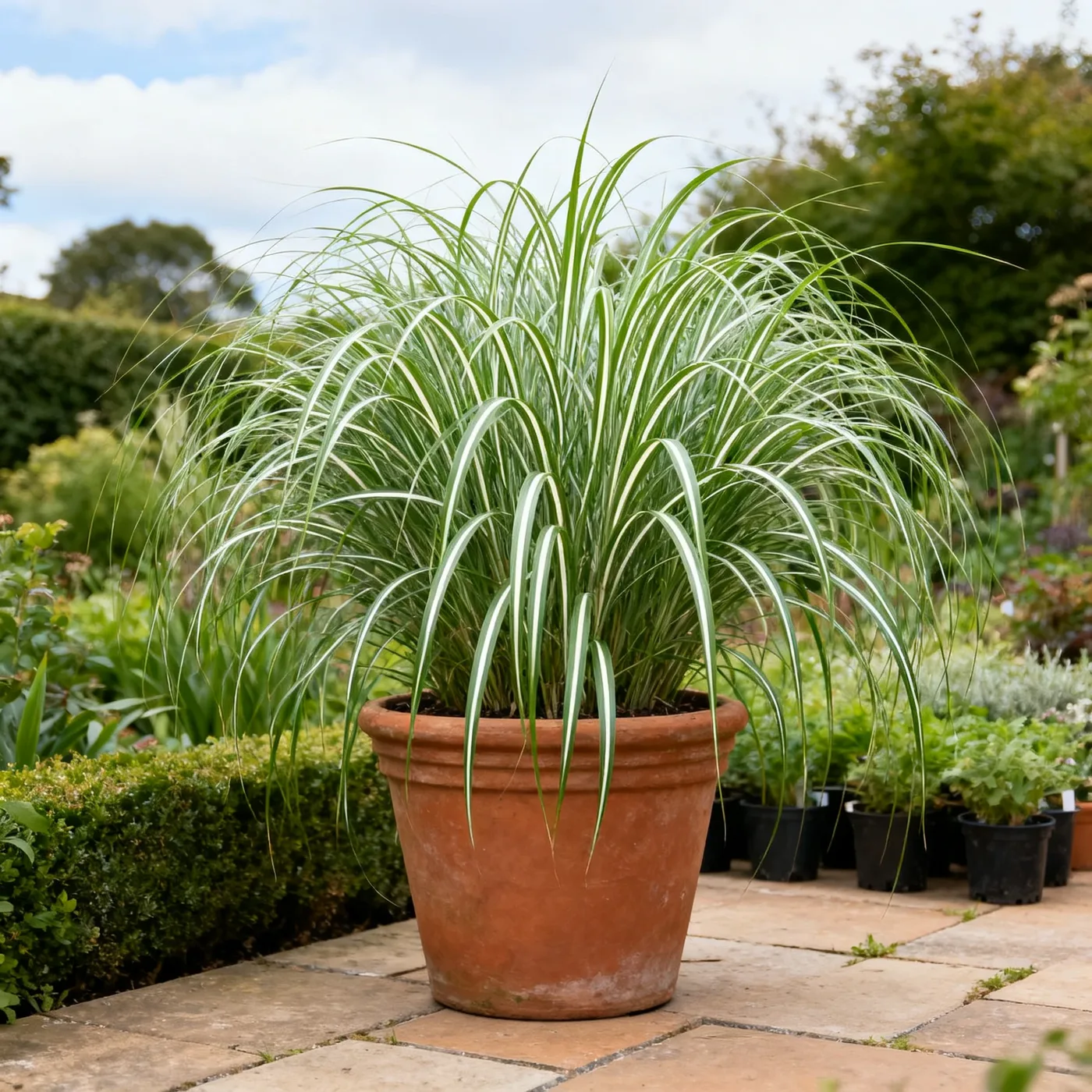
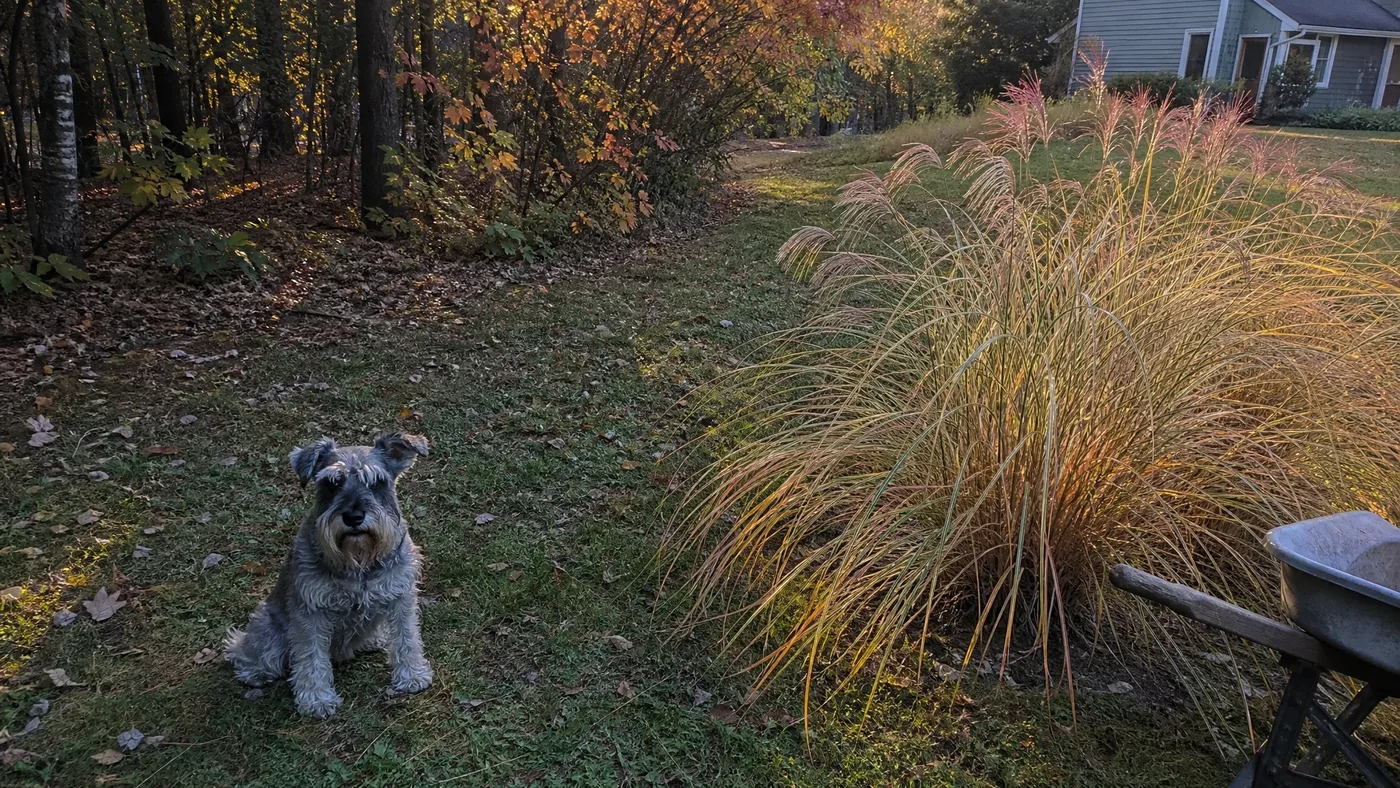
A mature 'Gracillimus' clump stands 5 to 6 feet tall and spreads 5 to 10 feet. That is a lot of fine, edged leaf at dog height, cat height and forearm height. Handled badly, it means scratched mouths, sore paws and red welts. Handled well, it means a clump you can plant and leave alone.
In this article, we'll go through what chewing does to dogs and cats, why your arms welt after pruning, what to expect from dust and pollen, and which signs justify a vet call.
My Dog Chewed Chinese Silver Grass
This is the most common pet question we hear, so we'll give you our position first and then the reasoning behind it.
Our Position on Toxicity
We treat Chinese Silver Grass as a non-poisonous plant that is a physical irritant when chewed. The Washington State Noxious Weed Control Board lists maiden grass as not known to be toxic, and maiden grass is another common name for Miscanthus sinensis. We have not found a source that lists 'Gracillimus' as poisonous to dogs or cats.
"Not known to be toxic" is not the same as "tested and proven harmless," so we say it plainly: the risk here is mechanical, not chemical. Your vet or a pet poison hotline can give you a firm answer for your animal.
Why Dogs Chew It Anyway
Dogs chew grass for all sorts of reasons, and a 5-foot fountain of green blades at nose level is an easy target. Young dogs and bored dogs are the usual culprits.
You will sometimes read that every ornamental grass is dangerous to pets. We don't follow that advice, because it sends people to rip out plants that are not the problem. The better move is to keep dogs from making a habit of it. A dog that chews one blade once is a very different case from a dog that shreds the clump every day.
Fresh green blades are softer than dry winter ones, but both have a finely toothed edge. NC State describes the species' leaves as inconspicuously serrulate, which is why even a gentle chew can scrape.
Drooling, Gagging or Vomiting After a Nibble
Most dogs that chew a blade or two show a short burst of oral signs, then go back to normal. Here is how to read what you see.
What You Will Notice
Typical signs are drooling, lip smacking, a cough or gag, pawing at the mouth, and sometimes a single vomit of grass and foam. They usually show up within minutes of the chew and settle fast.
Why It Happens
The cause is the leaf itself, not a poison. The blade is long, fibrous and edged. It scratches the lining of the mouth and tickles the back of the throat, and the stomach may reject the tough fiber. Dogs often vomit grass back up for the same reason, whatever the species.
What to Do at Home
Take the dog away from the clump and let the mouth settle. Offer fresh water and keep things calm. Look inside the mouth if your dog allows it, checking for a blade wedged between teeth or along the gums, and remove it only if it comes away easily.
Skip food for a short while and watch. If your dog is bright, drinking and acting normal afterward, you can leave it at home. If the signs repeat or get worse, jump to the vet section below.
A Cat That Skips Meals Near the Clump
Cats rarely make a scene. What you notice is a cat that sniffs the bowl and walks away after spending time around the grass.
Signs in Cats
Look for a cat that eats less, chews on one side, drools a little, licks its lips often or paws at its face. Some cats also hunch or retch after nibbling a blade. Cats love to nibble leaves, and a clump of narrow blades swaying in the wind is irresistible to a bored indoor-outdoor cat.
Likely Causes
The same mechanics apply as for dogs. A fine blade can scratch a sore spot in the mouth, and a cat will avoid hard kibble when the mouth hurts. A swallowed piece can also upset the stomach. We would not blame the grass automatically, though, because a cat that skips meals can have many reasons.
Fixes That Work
Give the cat an easier target. A pot of soft cat grass by the door pulls attention away from the clump. Offer softer food for a day or two and keep the blades out of reach where you can.
If your cat patrols a patio, a clump in a container puts the blades right at whisker level. Our guide to growing Chinese Silver Grass in pots covers siting, so put the pot where the cat doesn't walk.
A cat that still refuses food after you have removed the grass needs a vet's eyes, not more guessing.
Red Welts on Your Forearms After Pruning Chinese Silver Grass
Now to the people. If your arms look striped after a spring cut, the plant did it, and the fix is mostly what you wear.
What the Welts Look Like
Expect thin, straight red lines, often in clusters along the forearms, wrists and the backs of the hands. They look like paper cuts, and they sting and itch for a while. Kansas State's extension notes that dry grass blades can be itchy and have razor-like edges, and a dry, winter-bleached clump is exactly that.
'Gracillimus' has narrower leaves than the species, which means more blades in your arms' path when you gather a bundle. We often see customers show up after the first cut of the year with matching lines on both arms.
Dress for the Job
Long sleeves, thick leather gloves and eye protection are the standard. Kansas State recommends exactly that combination. Colorado State's extension adds a tip for tools: use hedge shears, not pruners, so you stay farther from the clump.
- Pick a snug cuff or tuck sleeves into gloves so blades cannot slide up your wrist.
- Tie the clump into a bundle with twine before you cut, so you are not grabbing loose blades.
- Cut in one pass and carry the bundle by the tied middle, away from your body.
Our cutting back guide gives you the timing and technique. Spring is the time for the job: remove dead foliage and old flowered stems then.
Afterward
Rinse your arms in cool water and wash off the debris before it works into the skin. Mild welts fade on their own. A rash that spreads, blisters or keeps getting worse is a question for a doctor, not for us.
Sneezing and Itchy Eyes Around Chinese Silver Grass
Some handlers sneeze, rub their eyes or get a scratchy throat when they work on a clump. The cause is easier to manage than most people expect.
Dust Is the Main Suspect
The sources we use do not tie this plant to a specific allergen, so we won't claim one. What we can say is practical: cutting a big dry clump throws up dust and fragments of old leaf and flower stem, and that lands in your eyes and nose. A clump this size is also covered in pink flowers in late summer and fall, per UF/IFAS, so you are close to it for months.
How to Cut Your Exposure
Wear safety glasses or goggles and a dust mask when you cut back. Work on a calm day with the wind at your back. Mist the clump lightly with water first, which holds down the loose debris. Wash your face and hands afterward and change your shirt before you go indoors.
If you react whenever you are near the clump, not only when you prune, think about where you planted it. Moving it away from the door, windows and patio seating helps. Our landscape ideas show placements that keep the clump at a comfortable distance.
If symptoms are strong or last, talk to your doctor or allergist. We can tell you how to grow the plant, but we can't diagnose what is bothering you.
Paw Cuts and Mouth Scratches From Razor Edges
Poisoning is not the real hazard for pets. Edges are, and this section is where we say how to keep animals from meeting them.
Where Injuries Happen
Dogs that tear through the clump chasing a ball can pick up fine cuts on the face, the pads, the belly and the inside of the lips. A big clump also hides things. A pet that wades in to find a ball or a rabbit can come out scratched around the eyes. Check the paws and muzzle when your dog has been in the bed, and look for a small limp, licking at a foot or blood on the coat.
Protect Them With Placement
Plant where animals don't run. The spread of 5 to 10 feet means you need room, so set the clump at the back of a bed, not on the path to the gate. Our planting guide covers spacing.
A low edging of shrubs or a short fence in front of the clump keeps dogs from cutting through it. Colorado State's extension tells gardeners to wear gloves to prevent cuts from the razor-sharp edges of some species, and what protects your hands also warns you about a dog's mouth.
After Pruning
Cut stubble can be stiff and sharp for weeks. Cut low and neat, and clear the clippings promptly, because piles of dry blades attract chewers and wind up in paws. Keep pets inside while you work.
Calling the Vet About Chinese Silver Grass
Most grass chewing needs only a watchful eye. This table separates what can wait from what cannot.
| What You See | Likely Meaning | What to Do |
|---|---|---|
| Brief drooling or one gag, then normal | Mouth irritation from the blade | Watch at home |
| One vomit of grass, then bright and eating | Stomach rejecting fiber | Watch at home |
| Repeated vomiting | More than a nibble | Call the vet |
| Retching with nothing coming up, pawing at the mouth, trouble swallowing | A blade may be lodged | Call now |
| Cat refusing food after the grass is out of reach | Sore mouth or another problem | Call the vet |
| Bleeding cut, limping or a swollen paw | Blade injury or infection risk | Call the vet |
| Swollen face, trouble breathing or severe lethargy | Emergency | Go now |
What to Tell the Vet
Say the plant's name, Miscanthus sinensis 'Gracillimus', and how much you think your pet chewed. Mention anything else in the yard that could be involved, such as fertilizer, mulch or sprays. That detail helps them rule things in or out quickly.
Plain curiosity about a single chewed blade does not need an appointment. Your gut does count, though. If your pet seems off, call.
Chinese Silver Grass Is Mostly Safe, With Caveats
Here is where we land. The plant is not known to be toxic to dogs or cats, so a nibble is usually a non-event. The real risks are physical: scratched mouths, cut paws, and welts and dust for the person doing the pruning.
The precautions are simple. Keep pets from chewing it as a habit, plant it away from their running routes, and cover up when you cut it back. Call the vet if you see any of these:
- Repeated vomiting, or retching with nothing coming up.
- A cat or dog that refuses food or has trouble swallowing after chewing the grass.
- A bleeding cut, a limp, or a swollen face or paw.
Chinese Silver Grass
Nursery-grown Chinese Silver Grass in sizes from 1 Gallon, shipped to your door.
From $33.97
Shop Now →As a small grower and a small business, we want you to enjoy this plant without worry. We raise Chinese Silver Grass on our own farms and handle these blades every season, so we know exactly where it bites and how to avoid it.