Is Chinese Silver Grass Invasive? Spread and Removal Guide
In late winter, before a single green blade shows, the crown of a Chinese Silver Grass clump is already busy. Buds on the dense knot of roots and rhizomes are swelling in cold soil, ready to push up a fountain of narrow leaves. The same machinery that makes the plant so dependable also raises the question we hear most: will it escape and take over?
The honest answer is that the species has a record as an invasive plant in parts of the country, and 'Gracillimus' is the more restrained cultivar. This guide covers everything you need to know about the invasive question, from how the clump grows and where its seed travels to telling it from native grasses, judging your own plant's risk and removing it if you decide to. Done well, you keep a tidy, handsome grass. Done badly, you find seedlings where you never planted.
How a Clump of Chinese Silver Grass Grows
Everything about spread starts below ground, so we begin with the crown and the roots that feed it.
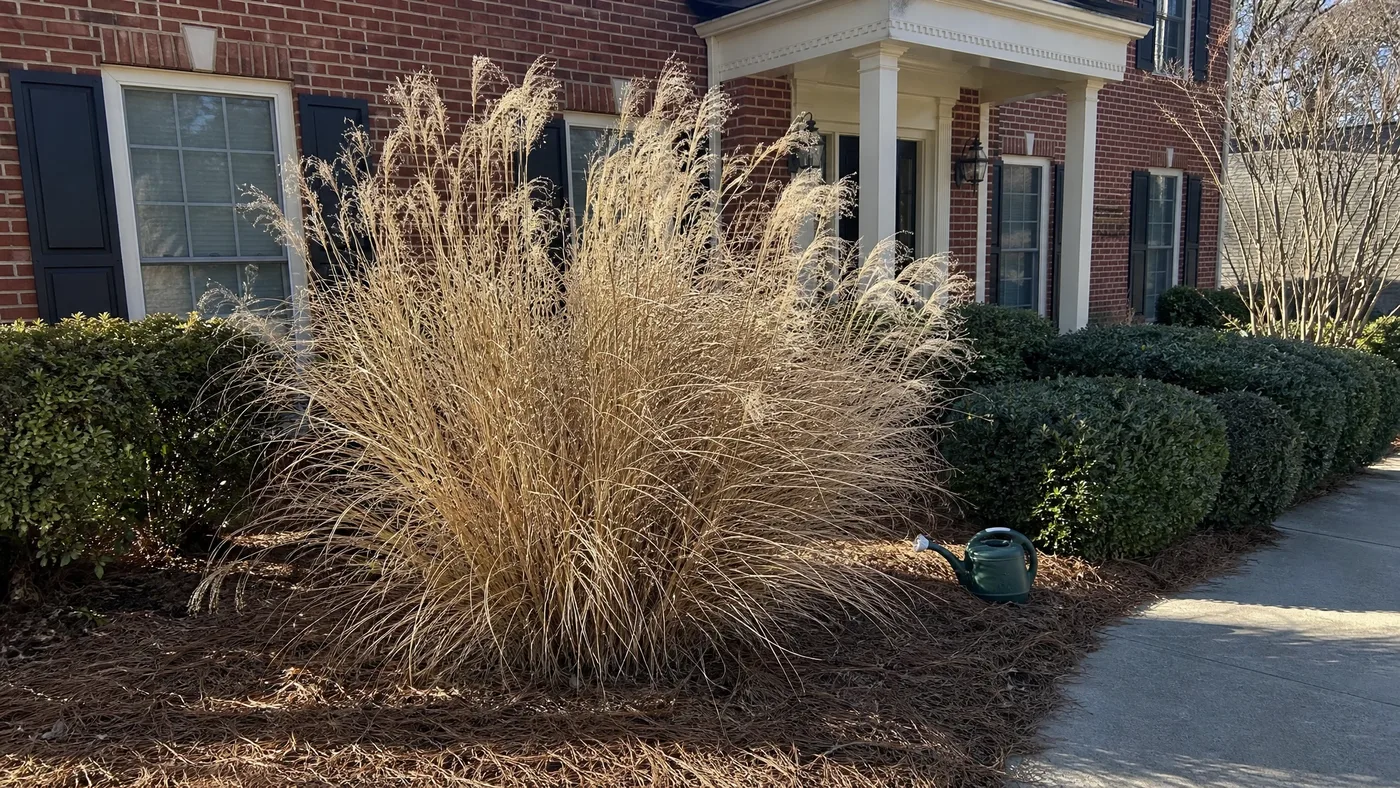
Chinese Silver Grass is a perennial clumper. Each spring new shoots rise from buds at the crown, and the older stems die back to the same spot. Over the seasons the crown thickens and the clump widens from its edges. UF/IFAS gives 'Gracillimus' a height of 5 to 6 feet and a spread of 5 to 10 feet, so a mature plant claims a lot of ground, but it does so in one piece.
Crown and Rhizomes
The crown is a tight mass of short, thick underground stems called rhizomes, wrapped in fibrous roots.
These rhizomes creep only a short way each year. That is why an established clump looks like a single dome rather than a patch with scattered shoots. Older clumps often open up in the center, because the oldest part of the crown tires first. If yours does, our guide to dividing Chinese Silver Grass shows how to renew it.
Growth Through the Year
The clump follows a simple yearly rhythm, and each stage matters for control later.
New leaves emerge in spring, the foliage fills out through summer, and the pink flowers open in late summer and fall. UF/IFAS rates the cultivar as growing fast, where NC State rates the species as medium. The plant also takes full sun and is quite drought tolerant, so it does not need coddling to put on that growth.
Why This Matters for Spread
Understanding the crown tells you what to expect from the plant and what to worry about.
A slow-widening, tight clump will not wander across a bed the way running grasses do. Its size is predictable, and you can plan around it. Its weight is also the reason removal is a chore, which we cover later. The part of the plant that really moves is not the root. It is the seed.
Rhizomes Stay Put While Chinese Silver Grass Seed Travels
Two spreading routes get lumped together in most warnings, and they behave very differently.
Rhizomes are the slow route. Maiden grass, the same species, spreads by wind and water through its many seed heads as well as its prolific rhizomes. In a garden bed, though, rhizome growth just thickens the clump you already have. You can see it, measure it and cut it back with a spade.
Seed is the fast route. Each plume is a mass of tiny seeds with silky hairs built to ride the wind. A single plant can drop seed well beyond its bed, into lawns, ditches and the edges of woods. Water carries seed further still along drainage lines. You cannot see this spread until seedlings appear.
Where 'Gracillimus' Differs From the Species
This is the point where the species warnings and the cultivar part ways.
The wild-type Miscanthus sinensis sets viable seed freely, which is what makes it a problem in the wild. 'Gracillimus' is listed on the Washington State University list as one that seldom self-seeds. Seldom is not never. What we tell customers is to treat the plant as low risk, not zero risk, and to look for seedlings each spring.
If you find them, our troubleshooting guide covers controlling self-seeded seedlings.
What Wind-Blown Seed Does to Nearby Habitat
The reason agencies take this grass seriously is ecological, so it helps to picture what happens where seed lands.
The plain fact is that Miscanthus sinensis is an invasive species in North Carolina. A large rhizome mass also makes established plants hard to remove. Seedlings that take hold in open, sunny ground such as roadsides, old fields and woodland edges can grow into dense stands.
What Gets Displaced
A dense stand changes the ground it occupies, and the effects are easy to read once you know them.
Tall, thick tussocks shade out the low wildflowers and native grasses that grew there before. A heavy mat of dead leaves builds up each winter and blocks light to the seedlings of other plants. The result is a stand of one species where a mixed meadow stood.
Wildlife in the Stands
Wildlife does use tall grass, but a single-species stand gives less than a varied one.
Dense clumps give cover and shelter to some birds and small animals, which is part of why people grow the plant at home. What a monoculture lacks is the range of native host plants that insects, and the birds that feed on those insects, depend on. The species is also deer resistant, so browsing does not hold stands in check. Your county extension office knows what is happening in your area.
Telling Chinese Silver Grass From Native Look-Alikes
Before you pull anything, be sure what you have. Several native grasses are tall, clumping and plumed, and you may want to keep them.
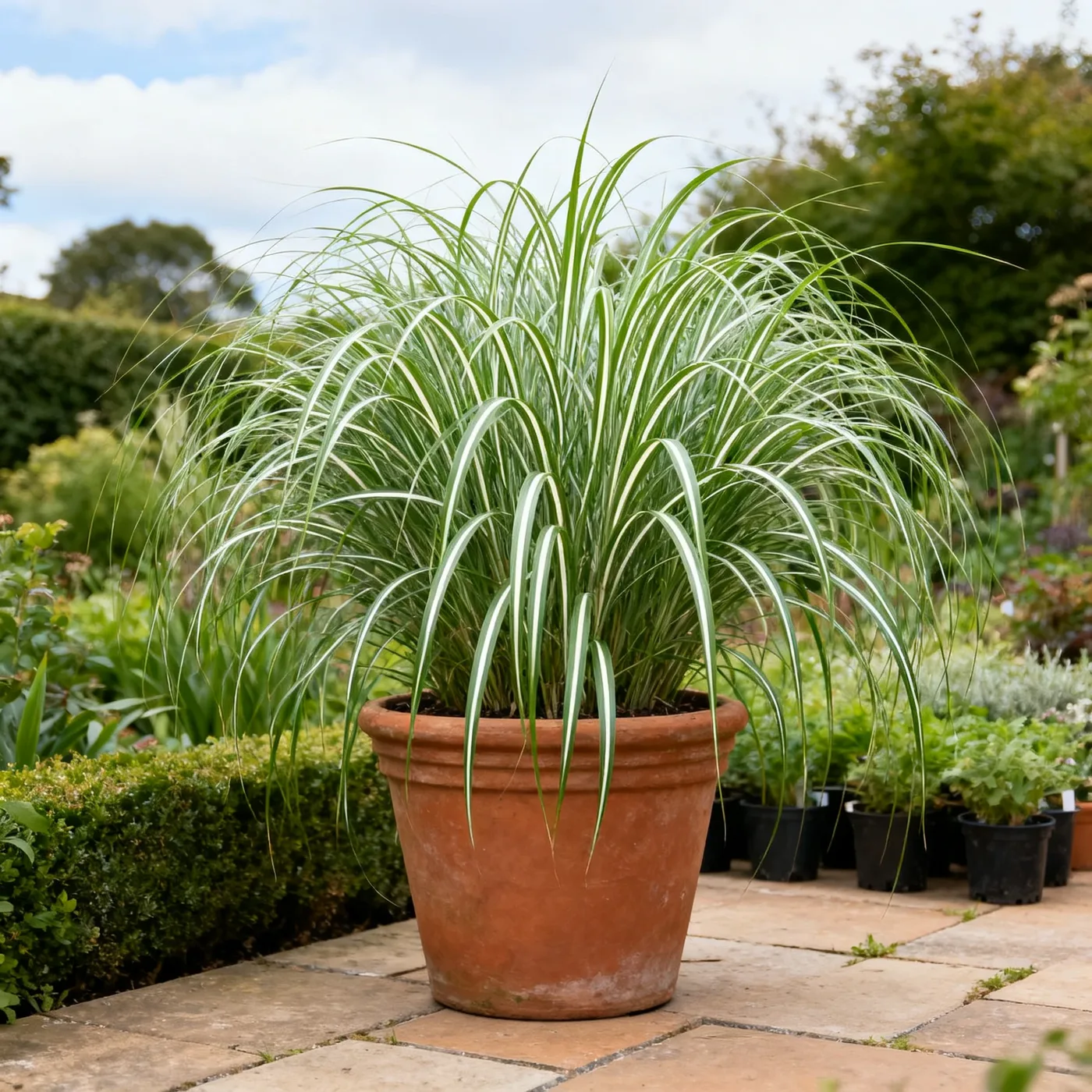
The clearest cue is the leaf. The blades usually have a distinctive mid-rib that can be silvery, white, cream or gold, with no hairs on the leaves. On 'Gracillimus' this shows as a pale stripe down each very narrow blade. The cultivar's leaves are narrower than the species, which gives it that fine, fountain-like texture.
Field Cues
Walk up to the plant and check these in order.
- Narrow, arching leaves with a pale midrib line running the length of the blade.
- A fountain shape, with an upright habit of 5 to 8 feet tall for the cultivar.
- Pink flowers in late summer and fall, a fall bloom that sets the cultivar apart from the species.
- Smooth blades with no hairs, which you can confirm by running a leaf through your fingers.
Natives to Keep
Switchgrass, little bluestem and Indiangrass are the native grasses people most often confuse with it.
Check the leaves first, since the pale midrib stripe is the cue to look for. If you are unsure, take a leaf and a plume to your county extension office. A wrong guess costs you a native stand, and a native stand is far harder to replace than a Miscanthus is to remove.
Reading Your Own Plant's Seed Risk
Blanket advice says to rip out every Miscanthus. We think that ignores how different a single mannered cultivar is from a wild-type colony, so judge your own site instead.
Look at the Site
Where the plant stands matters more than the plant itself.
A clump in a bed surrounded by pavement, lawn you mow weekly or dense planting has few places for seed to take root. A clump on the edge of a woodland, a meadow, a ditch or a stream is another matter, since seed lands on open ground and water can move it. If your property borders wild land, favor a different plant. A pot on the patio is a safer way to enjoy it, and our guide to growing Chinese Silver Grass in containers shows how.
Look at the Neighbors
Check what else is growing nearby, including on the next lot.
Other Miscanthus flowering within reach, in your yard or a neighbor's, adds to the seed load in the area. Count them before you decide. A lone 'Gracillimus' in a managed yard is a very different case from one among several seeding plants.
Look at the Plume Timing
'Gracillimus' flowers late, which helps.
It blooms in late summer and fall, so seed forms late in the season. That gives you a window to act. Cut the plumes once they color but before they fluff out, and the risk drops to almost nothing. Our guide to cutting back Chinese Silver Grass covers the late-winter cut for the leaves.
Removing Chinese Silver Grass Without Chemicals
If you decide the plant should go, start with the gentlest method that will do the job and move up only as needed.
| Method | Effort | Best for |
|---|---|---|
| Deadheading plumes | Low | Keeping a plant you like from seeding |
| Repeated cutting | Medium | Weakening a clump over a season or more |
| Digging out the crown | High | Removing it for good |
Deadhead First
This is the lightest step, and for most gardeners it solves the problem outright.
Snip plumes before they open into fluff and bag them for the trash. Do not compost them. One of the most common questions we get is whether this is enough. For 'Gracillimus', in a yard with no other Miscanthus nearby, it usually is.
Cut Repeatedly
Cutting starves the clump by taking away its leaves every time they open.
Cut the foliage to the ground, then cut every flush of new growth as it appears through the growing season. Without leaves the roots cannot refill their reserves. It takes patience, and you may need to keep at it for more than one season before the crown stops sending up shoots.
Dig the Crown
Digging works, but a mature clump is heavy, dense and tough.
Cut the foliage back hard first, then work around the clump with a sharp spade or mattock and lever the whole crown out. A clump of 5 to 10 feet across is a big job, so chop it into sections if it will not lift in one piece. Leave no rhizome fragments, since pieces can resprout. Check the hole for new shoots the following spring.
Bag the pieces for the trash or leave them to dry out completely before disposal. Never toss them on a compost pile or a woodland edge, where they can root again.
When Herbicide Makes Sense on Chinese Silver Grass
Chemical control is a last resort, but a legitimate one for large plants, old colonies and escaped seedlings in wild ground.
For the first treatment, wait until leaves reach about 12 inches, then spray a 1–3% glyphosate solution, with a surfactant to improve results. When the foliage dies, cut it back and repeat the process until regrowth stops. Always follow the label on the product you buy.
Timing and Limits
Timing decides whether the treatment works.
Start treatment before seed enters the seed bank in fall. Glyphosate kills nearly any plant it touches, so shield nearby plants and never spray near open water. One application rarely finishes a big clump, so plan on follow-up passes the next year.
When to Skip It
Not every case needs a chemical.
A single clump in a managed bed will come out with a spade, and digging leaves no residue. Save herbicide for stubborn crowns, large areas or places you cannot dig. Local rules vary, so check with your extension service first. And if you are replanting, we grow 'Gracillimus' itself, so you know exactly which cultivar goes in your bed.
Living Alongside Chinese Silver Grass Responsibly
You can keep this plant and keep it where you put it. 'Gracillimus' is a clumping cultivar that seldom self-seeds, so it behaves best in a managed bed, away from wild land and other Miscanthus.
Chinese Silver Grass
Nursery-grown Chinese Silver Grass in sizes from 1 Gallon, shipped to your door.
From $33.97
Shop Now →The one habit that matters is cutting the plumes before seed sets, every year, in that late-summer window. Customers come back to us for 'Gracillimus' because it gives them fine, arching texture and fall plumes year after year, and we grow it as a plant to tend, not to ignore.