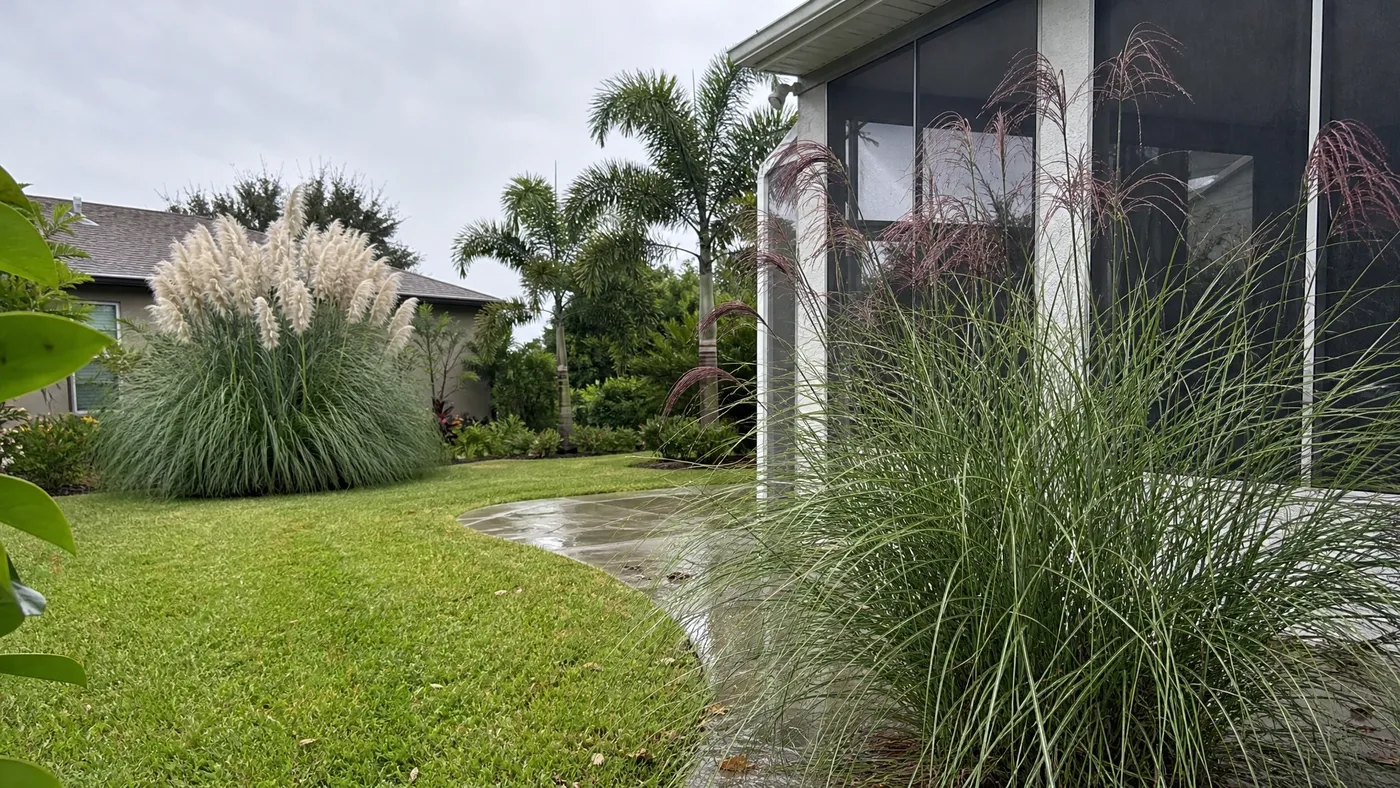
Chinese Silver Grass vs Pampas Grass: What's the Difference
Picture the aisle at a garden center. You are holding a tag that says "ornamental grass" and looking at two tall, feathery clumps that seem to promise the same thing. One is Chinese Silver Grass (Miscanthus sinensis 'Gracillimus'). The other may be pampas grass. From across the parking lot they look like cousins, but they are not close relatives, and they behave very differently once planted. One is a fine-leaved clump you can set beside a path. The other is a giant that wants a lawn to itself.
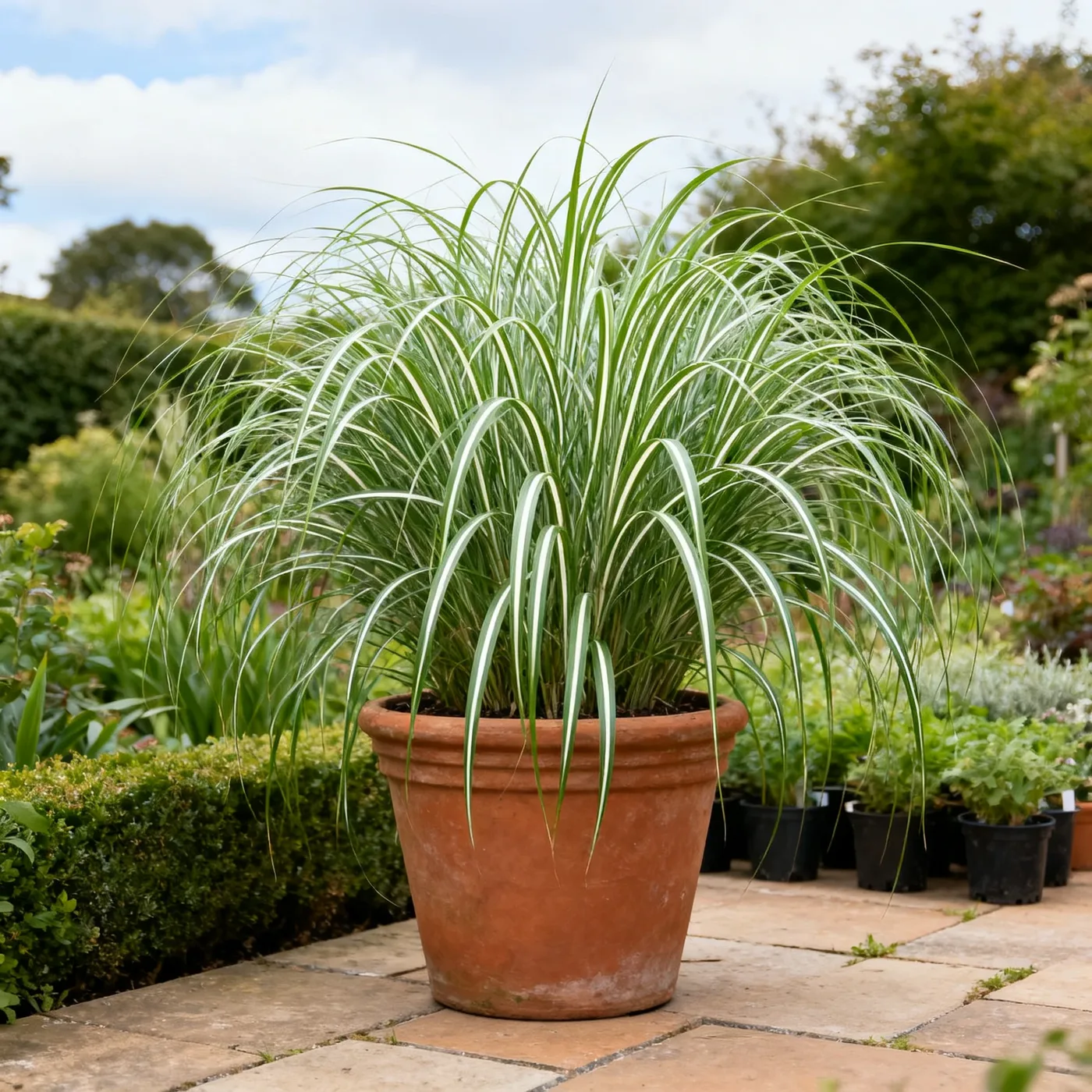
This article talks about how the two plants compare on size, leaf edges, cold hardiness, soil and landscape role, and answers the questions customers ask us most. Read on to learn which one fits your yard and how to tell them apart on a nursery tag.
Each section ends with a verdict, and we say plainly which plant we would choose.
Two Genera, Not Two Names for One Plant
Shoppers often assume "silver grass" and "pampas grass" are two names for one plant. They are not, and a little plant vocabulary clears it up fast.
Genus and Species in Plain Terms
Here is how a botanical name works. Think of a person's name written surname first. The first word is the genus, the larger group of closely related plants. The second is the species, one particular kind inside that group. A third name in quotes, such as 'Gracillimus', marks a cultivar, a selected form kept true for specific traits.
Our plant is Miscanthus sinensis 'Gracillimus'. Miscanthus is the genus and sinensis is the species. Pampas grass is Cortaderia selloana, and Cortaderia is a different genus entirely. The two are unrelated at the level that matters in the garden, which is why they differ in size, leaf edges and cold tolerance.
Why the Names Get Tangled
Common names are loose, and garden centers do not always help.
Miscanthus sinensis is sold as Chinese silver grass, maiden grass and, by some sellers, Japanese silver grass. Pampas grass is the common name for Cortaderia. Both are tall, clumping grasses with feathery plumes, so a shopper scanning an aisle sees the resemblance and stops there. One of the most common questions we get is whether "ornamental grass" on a tag means pampas. The tag alone cannot tell you, so read the Latin name.
The species is also variable, with Miscanthus sinensis running 4 to 12 feet, so a tag without a cultivar name tells you little. 'Gracillimus' is the narrow-leaved, fall-blooming form, and it is the plant we mean throughout this guide.
Mature Height and Width in Chinese Silver Grass and Pampas
Size is where the two plants part ways first, and it settles most buying decisions. This section puts the numbers side by side and then says which plant suits which site.
Size Figures From the Extension Sheets
The table below uses university figures for mature plants. Notice how close the spreads are, because that surprises most people.
| Trait | Chinese Silver Grass 'Gracillimus' | Pampas Grass |
|---|---|---|
| Genus | Miscanthus | Cortaderia |
| Mature height | 5–6 feet | 6–12 feet |
| Mature spread | 5–10 feet | 6–10 feet |
| Habit | Upright, fine-textured clump | Large, dense mound |
'Gracillimus' reaches 5 to 6 feet with a 5 to 10 foot spread. Pampas grass stands 6 to 12 feet, forming a "large, dense, grassy mound, 6-10' x 6-10'."
The cultivar typically reaches 5 to 6 feet tall, though NC State Extension describes its upright habit at 5 to 8 feet, so allow for the taller figure. Our guide on how big Chinese Silver Grass gets covers growth rate and plume height in detail.
Verdict for Tight and Open Sites
Here is which plant we would put where, and why the answer is not just about height.
For a tight site, choose Chinese Silver Grass. The bottom of pampas's height range sits right where ours tops out, and our blades arch rather than bulk up.
Do not read "tight" as "tiny," though. A spread of 5 to 10 feet means you should not wedge a clump against a walkway or a window. Give it room to arch and it will look relaxed. Pampas belongs only on an open site where it has a full circle of lawn, roughly 10 feet across, and the sky above it to match. Most yards are not that site.
Leaf Edges That Cut Differently
Anyone who has brushed past a grass blade knows an edge can bite. Here is what separates the blades on these two plants and how to handle each.
What Makes an Edge Sharp
Two things matter: the margin of the blade and its width. Pampas blades are very sharp, with "numerous, whip-like, very sharp serrated margins." Serrated means the edge carries tiny teeth, like a saw, so it drags and cuts as it slides across skin.
'Gracillimus' is built finer. Missouri State notes that this form has more slender leaves than the species, about 1/4 inch wide. A narrow blade has less mass behind it when it swings against your arm or your pant leg, and the whole clump feels soft when the wind moves it.
Handling Each Plant
Both plants need gloves when you cut them back, and the difference is in how much protection.
In our rows, we wear gloves and long sleeves for either grass, even though Chinese Silver Grass is the gentler one. Pampas calls for heavy gloves, eye protection and a plan for where the cut stems will go. Our guide on when and how to cut back Chinese Silver Grass walks through the spring cleanup, which is far less of a fight than the same job on a pampas clump.
Verdict: Chinese Silver Grass wins for planting near paths, patios, play areas and pets. Put pampas where nobody walks past it daily, well away from the places children and dogs cut through.
How Cold Winters Treat Chinese Silver Grass
Cold tolerance is where the two plants differ in ways you cannot see on the tag. This section sets out the ranges and what each plant does through a hard freeze.
Zone Limits on the Tag
Zone numbers tell you the coldest winter a plant is expected to survive, so they are worth reading before you fall for a plume.
'Gracillimus' is hardy in USDA zones 6 through 9. The species is broader, growing in zones 5a to 9b, and a separate UF/IFAS sheet gives zones 4 through 9. The cultivar sits inside the species range, so do not assume the species' cold tolerance applies to this plant.
Pampas grass is generally the less cold-tolerant of the two. We do not have a zone figure to quote for it here, so check with your local extension service before planting it anywhere that sees hard winters. Our hardiness zone guide goes deeper on our plant.
What Happens in a Hard Freeze
The plant's behavior in winter is straightforward and mostly hands-off.
A freeze browns the Chinese Silver Grass foliage, and the clump stands dormant as pale, rustling stems through winter. The usual advice for 'Gracillimus' is to remove dead foliage and old flowered stems in spring, so leave it alone until then. Near the cold edge of zone 6, a spot sheltered from wind and a layer of mulch are cheap insurance. Our winter care guide covers the details.
Verdict: For cold climates, Chinese Silver Grass is the safer plant. Choose pampas only if you live where winters are mild, and confirm its limit with your extension office.
Soil, Water and Sun Demands of Chinese Silver Grass
A plant that tolerates many yards is a plant you can leave alone, so this is the section where we judge forgiveness. We can only speak with numbers for the plant we grow, and we say where the pampas figures should come from.
Clay, Sand and Dry Spells
Soil is the first thing most people worry about, and 'Gracillimus' gives you little to worry over.
'Gracillimus' does fine in chalk, clay, loam or sand, in acid, alkaline or neutral soil, and in moist but well-drained or well-drained ground. That is a wide welcome. Our soil and drainage guide explains how to check your own site.
Once established, this ornamental grass is quite drought tolerant. Water it well in its first season, then let rainfall do most of the work.
Full Sun and Few Pests
Light and pests are the last two things to check before you plant.
Full sun is the answer. The cultivar wants full sun. The species can take partial shade, but we would not rely on that for 'Gracillimus'. Give it the sunniest spot you have.
Pests are rarely a worry. No pests or diseases are of major concern, though rust can occasionally appear on the foliage and often goes away in drier weather. You rarely need to act.
Verdict: Chinese Silver Grass is the forgiving plant here. It takes poor, clay or sandy ground and dry spells without complaint. For pampas soil and water needs, ask your local extension service.
Where Chinese Silver Grass Fits in a Landscape
Size and edges decide the job each plant can do. This section contrasts the two roles, from accent to screen to border.
Roles for Chinese Silver Grass
Chinese Silver Grass is a working plant, and it takes on more than one job in the same yard.
The fine, arching foliage suits a screen along a fence, an accent beside a gate, or the back of a mixed border. Pink flowers arrive in late summer and fall, so the clump gives you a second show after the leaves have filled out.
Customers usually ask us whether a row of it can hide a neighbor's fence. It can, once the clumps knit together. Our 20 landscape ideas cover rows, borders and mixed plantings. If your question is about a smaller rival, see our comparison with fountain grass.
Roles for Pampas Grass
Pampas has a narrower brief, and the sources are clear about it.
Pampas is best used as a specimen, standing alone or against a backdrop of evergreens. That is a solo role, and it does not blend into a border. Its blades have very sharp edges, and it is highly invasive in some areas of the United States.
Before planting either grass, ask your extension service whether your state tracks ornamental grasses. That is a sensible habit with any large grass, and especially with pampas.
Verdict: For nearly every home landscape, choose Chinese Silver Grass. It can be a screen, an accent or a border plant. Pampas is a one-job specimen, and the job is a large one.
Choosing Chinese Silver Grass When Space Is Limited
If your yard is small, cold, or crossed by paths, pick Chinese Silver Grass. Its mature size of 5 to 6 feet suits a typical yard, it is hardy in zones 6 through 9, it handles clay and dry spells, and its fine blades are kinder to bare arms. Pick pampas only with a large open lawn, a mild climate and a good reason to want a giant.
Chinese Silver Grass
Nursery-grown Chinese Silver Grass in sizes from 1 Gallon, shipped to your door.
From $33.97
Shop Now →Rule of thumb for the tag: Miscanthus is the fine-leaved, upright clump, and Cortaderia is the big saw-edged mound. Every Chinese Silver Grass we ship leaves our own farm firmly potted and packed to travel, so the clump you open is ready to go into the ground. We are a small business, and we would rather you choose the right grass than the biggest one.