Chinese Silver Grass vs Feather Reed Grass: Which to Plant
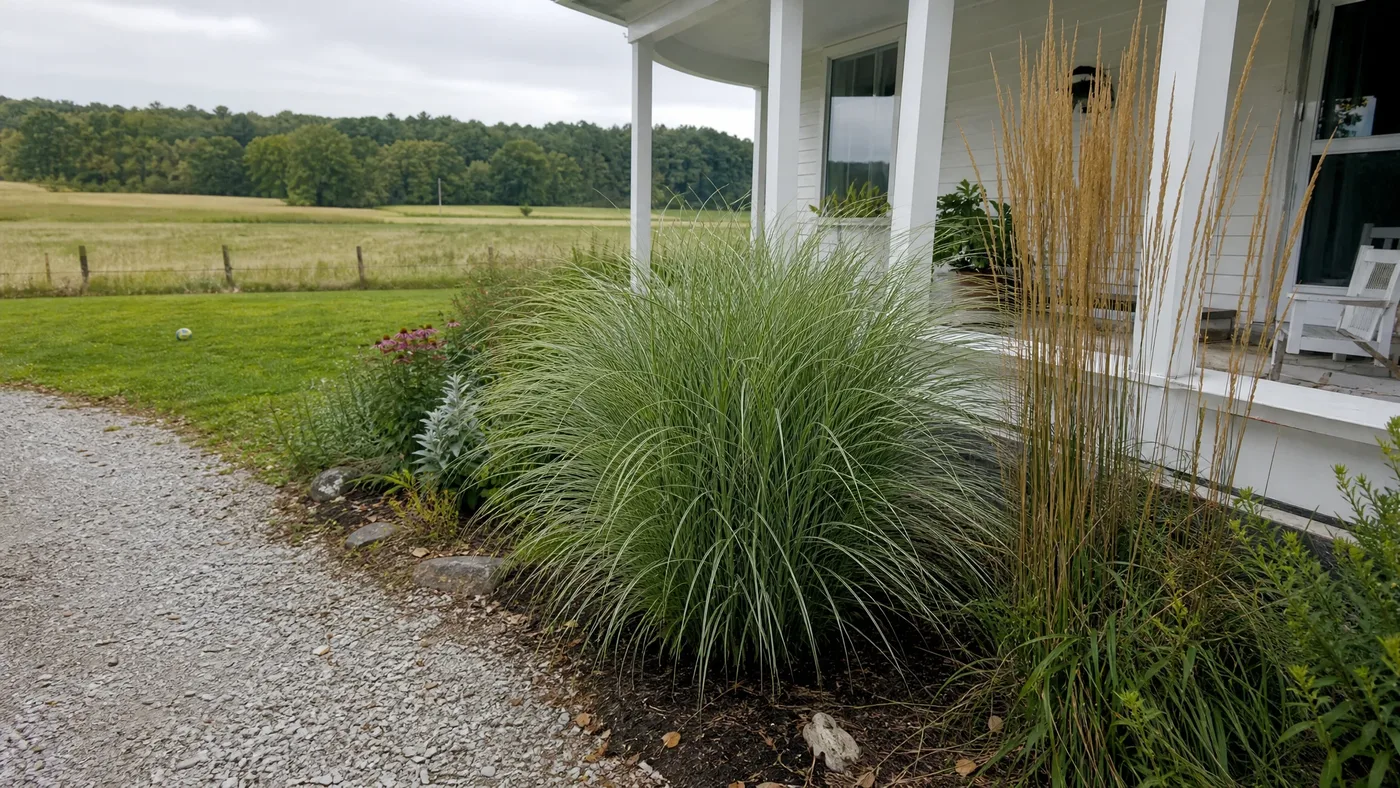
Feather reed grass makes its sound before it makes much of a picture. In a June wind the stems hiss and rustle, and the Chinese Silver Grass beside it is still a quiet green fountain with nothing to say. By September the two have traded places.
A common belief is that these are two tall, fine-leaved grasses that do the same job, so you can choose on price or on whichever pot is closer. What we see instead is two plants with different widths, different seasons and different manners in wind, heat and wet ground. Pick wrong and you get a clump swallowing a walkway, or a column too thin for the space you wanted filled.
This article talks about 'Gracillimus' against 'Karl Foerster' feather reed grass and answers the questions customers ask us most. Read on to learn which one suits a narrow bed, an early-color walk, a windy corner, a hot pot and a soggy strip, and when to plant both.
A Narrow Side Bed and Chinese Silver Grass
Start with the case that settles the most arguments: a tight bed where width, not beauty, picks the plant.
The Numbers That Decide It
Here is the gap in plain figures, and it is a big one.
'Karl Foerster' feather reed grass stands 3 to 5 feet tall and only 1 to 2 feet wide, rising from a narrow clump as an upright column. 'Gracillimus' reaches 5 to 6 feet and has a spread of 5 to 10 feet. One is a pencil and the other is a fountain.
Where Each One Fits
Think about the strip between a walk and a foundation, or a bed along a fence.
If the bed is 3 feet deep or less, plant the feather reed grass. Its leaves stay close to the clump, so it will not flop onto the path or brush the siding. A row of them 2 feet apart reads like a tidy screen, and you can tuck perennials right up to the base.
If you have 6 feet or more of depth, 'Gracillimus' becomes a real option, but give it room to arch. Our spacing advice is in Chinese Silver Grass spacing for borders, hedges and privacy, and it assumes the clump will fill every inch you allow.
You will hear that a big grass can be squeezed into a narrow bed if you divide it often. We would rather choose the plant that already fits. Fighting a fountain's natural shape means a yearly job, and the result never looks as good as a plant sitting in the right space.
The narrow bed also changes how the two read from the street. A column of feather reed grass looks the same from the side as from the front, while 'Gracillimus' looks best with air around it. That is the whole case in one picture: tight space goes to the column, open space goes to the fountain.
The Front Walk That Wants June Plumes
Some yards want color early, when the garden is fresh and visitors are walking up to the door. Here the calendar picks the winner.
What Feather Reed Grass Does in June
'Karl Foerster' is the early performer. Its loosely feathered, subtly purplish flower heads appear in early summer. The plumes still look good by late summer as narrow buff spikes.
Plant it where you pass daily, because the first weeks of bloom are the best part and they are easy to miss if you are not looking. The flowers also rustle, so put it within earshot of a bench or a door.
What Gracillimus Is Doing Meanwhile
Beside it, 'Gracillimus' is a foliage plant for most of the season. Its leaves are narrower than the species, which gives that soft, fine fountain, but its bloom does not arrive until late summer and fall, when it bears pink flowers that age to silvery tassels. Our guide to plume color and bloom time covers what to expect week by week.
So a front walk planted only with 'Gracillimus' has a bare-feeling June. It is green and graceful, but it is not showing off yet.
Our Call for the Walk
If early color is the goal, choose feather reed grass for the walk. If you want a long season of interest from midsummer through winter, 'Gracillimus' wins on staying power. Mix them if the walk has room: the column in front for June, the fountain behind for September.
One note on light. Feather reed grass blooms best in light shade, especially afternoon shade, while 'Gracillimus' wants full sun. A west-facing walk with a tree on one side can host both.
Chinese Silver Grass on a Windy Corner Lot
A corner lot gets wind from two directions, and grasses show their character fast when it blows.
Standing Versus Swaying
The two plants answer wind differently, and neither answer is wrong. Feather reed grass stays a stiff, vertical column. It is useful as a vertical accent for exactly that reason, and a gust moves the top of the stems more than the whole clump.
'Gracillimus' sways. Its long, narrow leaves arch and stream sideways, then spring back, so the whole plant looks alive on a breezy day. If you want to see wind, this is the plant that shows it.
Holding Plumes Through the Blow
Seed heads are where they differ most. In our rows, the feather reed grass plumes stay tight and upright for weeks, because the narrow clump gives the wind little to push against. 'Gracillimus' plumes open up and fluff as they age, and the light tassels move with every gust.
On a really exposed corner, a few things help either plant. Plant in full sun, give the root zone a good first season of watering so the clump anchors well, and place the plant a couple of feet out from the corner so wind does not funnel straight into it. Our watering guide shows how to establish a new clump.
Which We Pick for the Corner
For a corner where you want a plant that looks relaxed in a storm, take 'Gracillimus'. For a corner where you want a crisp line that holds its shape, take feather reed grass. The mood you want decides it, because both stand up to ordinary wind.
Remember that 'Gracillimus' is a wide plant. Its sweep needs clear space, so do not tuck it right against a gate, mailbox or sidewalk where arching leaves will catch passersby.
A Pot on a Hot Deck in July
Containers on a sunny deck are a harsh test: reflected heat, small root zone and fast drying.
Which Habit Copes
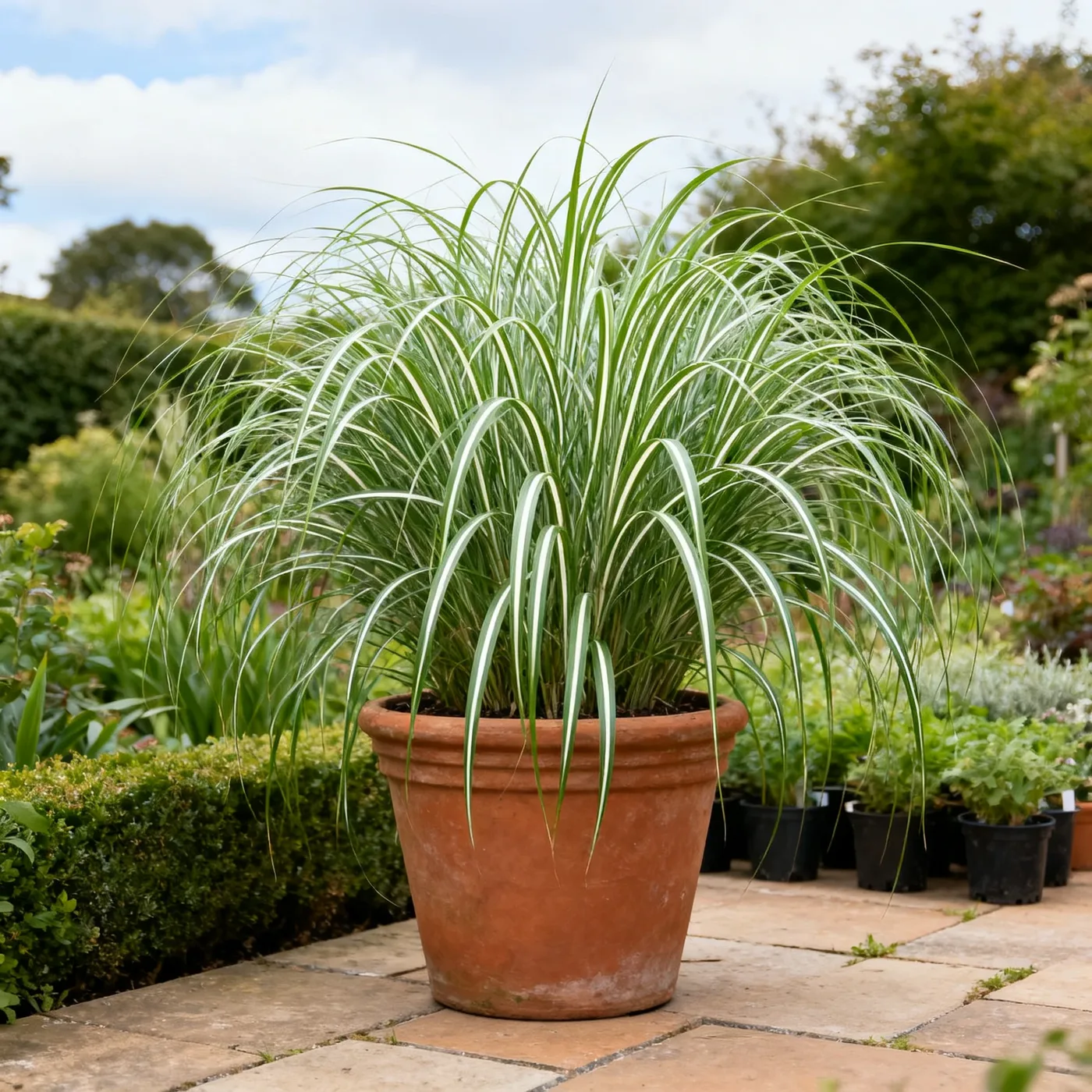
'Gracillimus' is the heat plant here. It is quite drought tolerant and grows in full sun, so a south-facing deck suits it. Its fine leaves stand up to blazing afternoons without scorching into something you would rather not look at.
Feather reed grass can sulk. It blooms best in light shade, especially afternoon shade that mitigates hot summers. Put it on a hot deck in full afternoon sun and the foliage and flowering will usually tell you it is unhappy.
The Catch With Pots
Size is the other half of this. A mature 'Gracillimus' can spread 5 to 10 feet in the ground, so a pot is a short-term home at best, and the plant will fill any container fast. Choose a large, heavy pot and expect to divide or move it. Our guide to growing Chinese Silver Grass in pots walks through container size and repotting.
Feather reed grass is the easier fit for a pot by size, since it stays narrow, but only if you can site the pot out of the worst afternoon sun. Check the hardiness of your zone before leaving any potted grass out through winter, because roots in a pot get colder than roots in the ground.
Whichever you pick, water deeply when the top inch or two of the mix dries out, and do not let a saucer hold water around the roots. Container grasses dry out faster than anything in the ground, and a July heat wave can empty a pot between mornings.
On a hot deck, then, we send people to 'Gracillimus' for sun and to feather reed grass for a pot that gets shade after lunch.
The Soggy Clay Strip by the Downspout
The last case is the spot most people try to avoid: heavy clay that stays wet after every rain.
What We Can Say About Wet Ground
Clay is fine for 'Gracillimus', standing water is not. Neither grass is a bog plant, and we would not plant either in a spot that stays flooded.
Rust can show on the foliage in damp weather, though it often goes away in drier weather and no pests or diseases are of major concern. For feather reed grass in wet ground, we do not have a verified figure for how long it tolerates soggy roots, so check with your local extension service.
Fixing the Spot Before You Plant
A downspout strip is a drainage problem first and a planting problem second. Extend the downspout so the water goes away from the bed, or raise the planting area a few inches with loose soil. That one change gives either grass a far better chance than any choice of plant.
When the soil is heavy but drains within a day, 'Gracillimus' is the one we would put in. Our guide to soil, drainage and pH for Chinese Silver Grass covers how to test.
The narrow feather reed grass makes more sense where the strip is thin. Both are better off with a little amendment worked in at planting time, not a thick layer in the hole, which can hold water like a bucket in clay.
Choosing Chinese Silver Grass or Feather Reed for Yours
Here is the plain choice, bed by bed. If you searched for maiden grass vs Karl Foerster, note that maiden grass is another name for the same Miscanthus.
The table sums up the cases above.
| Your situation | Our pick | Why |
|---|---|---|
| Bed 3 feet deep or less | Feather reed grass | 1 to 2 feet wide |
| Early color by the walk | Feather reed grass | Blooms in early summer |
| Late-season show | 'Gracillimus' | Pink flowers in late summer and fall |
| Windy corner, relaxed look | 'Gracillimus' | Arches and sways |
| Hot, sunny pot | 'Gracillimus' | Full sun, quite drought tolerant |
| Heavy clay, drains well | 'Gracillimus' | Heavy soil that drains within a day |
Zones matter too. UF/IFAS lists 'Gracillimus' in zones 6 through 9 where the species sheet runs 4 through 9, so cold-zone readers should read our hardiness zone guide before buying.
Where you have room, plant both. Feather reed grass goes in front at 3 to 5 feet, 'Gracillimus' behind at 5 to 6 feet, and the bed has something to say from June until the snow. If neither suits you, our comparison of Chinese Silver Grass and fountain grass may.
Chinese Silver Grass and Feather Reed Grass Together
Picture one border in two seasons. In early summer 'Karl Foerster' stands up in a tight line, its feathery plumes rustling in the breeze while the 'Gracillimus' behind it is a soft green fountain. By fall the column has faded to buff, and the 'Gracillimus' lights up with silvery tassels that catch low sun.
Chinese Silver Grass
Nursery-grown Chinese Silver Grass in sizes from 1 Gallon, shipped to your door.
From $33.97
Shop Now →That is the real answer to the question in the title: the right choice depends on the bed, and the best choice is often both. Every Chinese Silver Grass we ship comes from our own farms, potted and packed by the same growers who raised it, so it reaches you ready to plant. We are a small business, and we would rather send you one good clump than a crowded box.