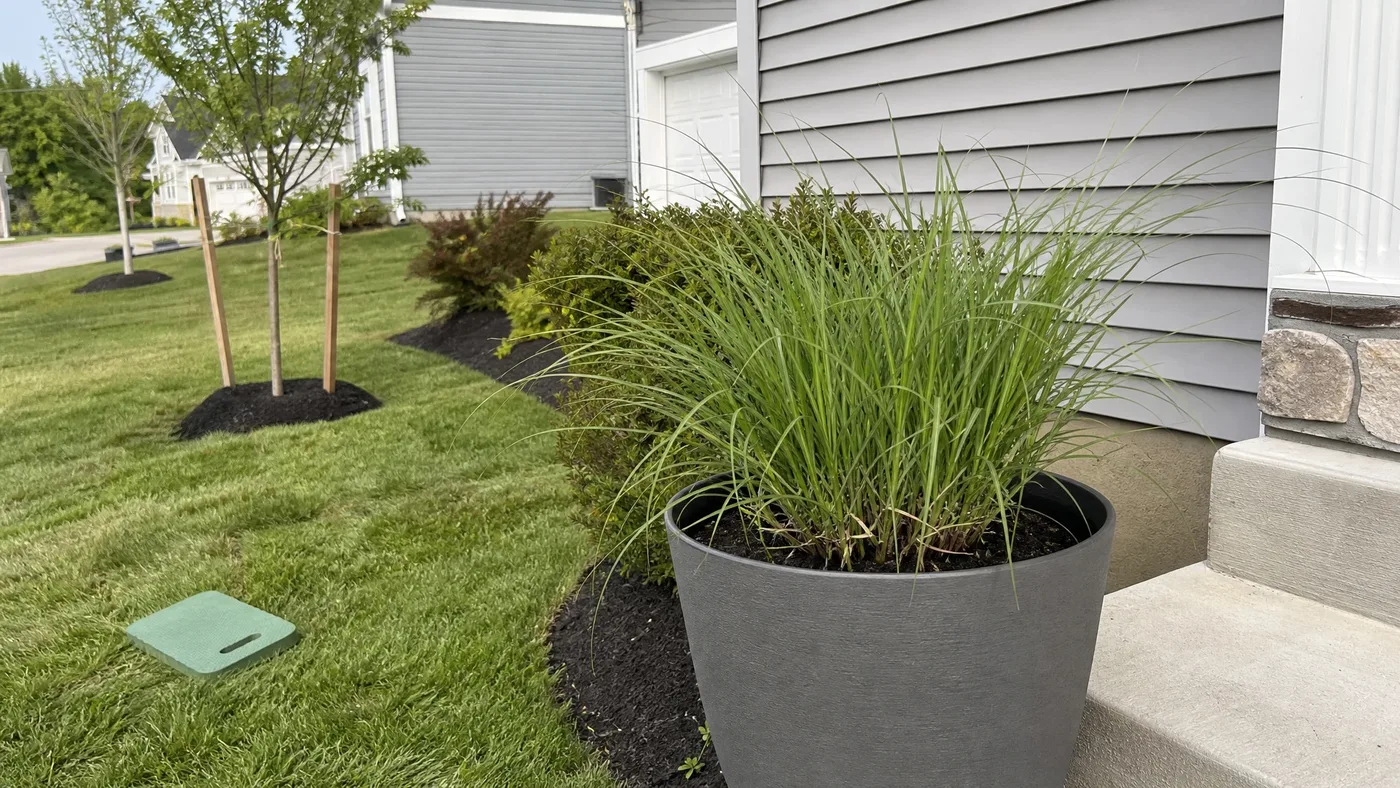
Chinese Silver Grass Origin: Where This Plant Comes From
A plant sold in tidy pots at every garden center spent its long history on windy East Asian hillsides, unsupervised. Nobody fed it, nobody staked it, and nobody cut it back on a schedule. Chinese Silver Grass, Miscanthus sinensis, is native to China, Korea and Japan, and 'Gracillimus' is a selection of that wild species.
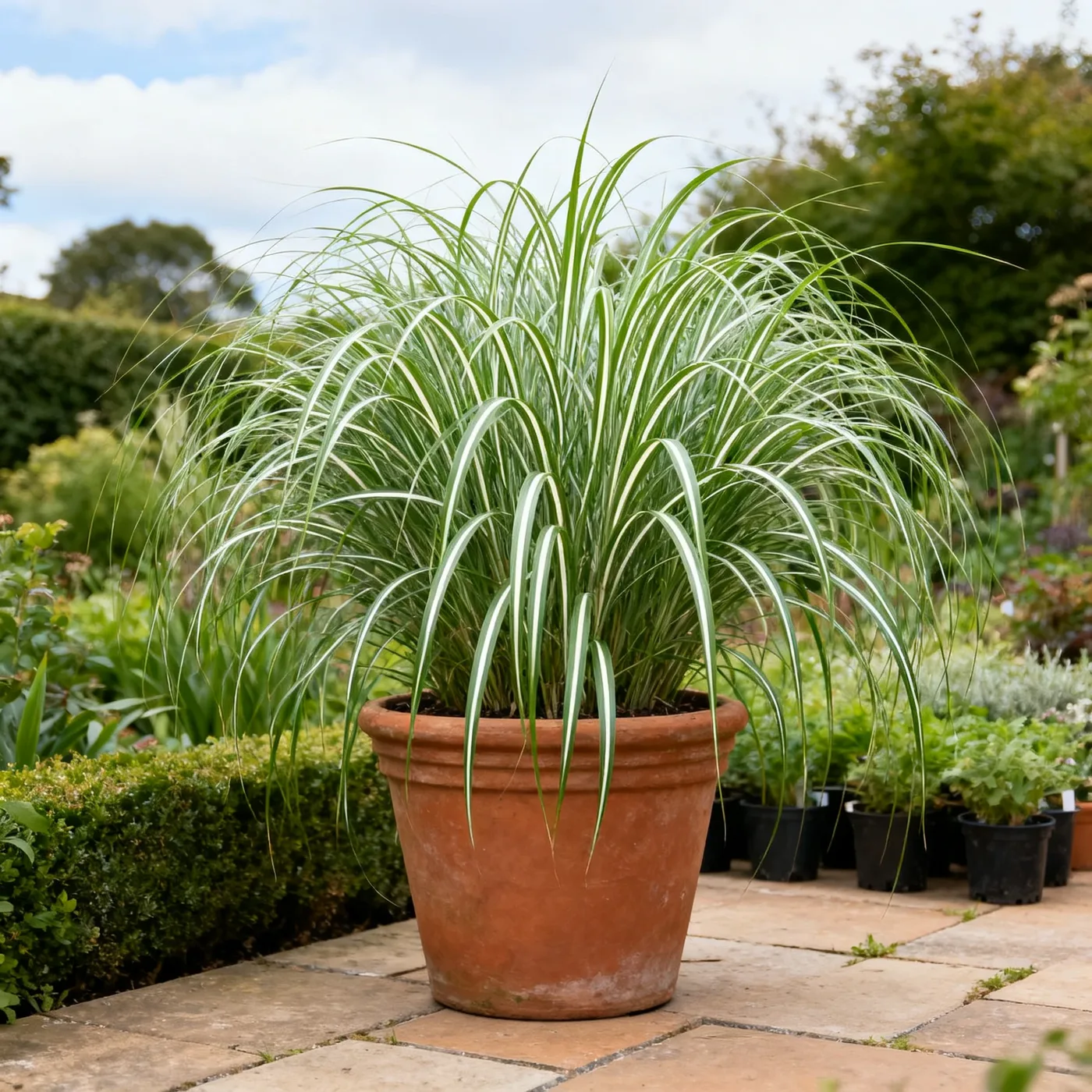
That history is the best care sheet you will find. A grass raised on rough slopes wants sun, drainage and very little attention, and it gives you nothing extra for the fuss. Pamper it and you waste effort and water on a plant that never asked for either.
In this article, we'll go through where the species grew wild, how it got its names, how it reached Western gardens, and what its home climate means for the zones and sites where 'Gracillimus' does best.
Where Chinese Silver Grass Grew Wild First
The native range is short to state and wide to picture. Here is the range, then the kind of ground the plant came from, then what that means for the cultivar in your yard.
The Countries It Calls Home
This is the part most searchers want, so here it is plainly, with the source behind it.
The original species comes from East Asia, meaning China, Korea and Japan. That is a real three-country range, not a single mountain somewhere. Other sources lean on one country. The Missouri IPM program, for example, calls the parent native to Japan, which is true but not the whole story.
Customers usually ask us whether it is really Chinese or really Japanese. It is both, and Korea too, which is why we cover the name tangle in our guide to maiden grass, Japanese and Chinese silver grass.
The Ground It Grew In
Here is what we can say about the terrain, and what we won't guess at.
Think open, sunny, exposed slopes rather than sheltered woodland. We can't give you an elevation or a soil survey, because the sources we trust don't, and we won't invent one. What they do say tells you plenty: this is a warm-season, clump-forming grass, and it can thrive in poor soils and handle drought once established.
A plant that makes its living on thin hillside ground does not need rich garden loam. It needs light, room and a place where water runs off instead of sitting. Keep that picture in your head, because every planting decision later in this guide comes back to it.
Wild Plant, Garden Selection
The native range describes the species, and your pot holds a cultivar, so the two need separating.
A wild population grows from seed across a wide area, which means individual plants differ in height, leaf width and the way they flower. 'Gracillimus' is one fixed selection out of that variety. It inherits the toughness of the hillside parent and trades the wild plant's unpredictability for a known shape. That is why the origin story fits the cultivar well, while the exact numbers, like hardiness, belong to the cultivar and not to the species.
What the Botanists Called Chinese Silver Grass, and When
The botanical name does more work than the common names ever did. It pins the plant down while the everyday names wander.
Reading the Latin
Both halves of the botanical name tell you something, though less than people hope.
Miscanthus is the genus, the group of tall perennial grasses this plant belongs to. Sinensis is Latin for "of China," which points at one part of the native range and happens to miss Japan and Korea. We won't hand you a year for when the name was settled, because the sources we rely on don't give one, and a made-up date is worse than none.
Why the Common Names Wandered
The plant has more everyday names than any grass needs, and there is a plain reason for it.
The names drifted because the plant was admired in several countries and sold in several more. Maiden grass, Japanese silver grass and Chinese silver grass all describe the same species, and which one you hear depends mostly on who sold it to you. Nurseries settled on a handful and kept them, and the habit stuck.
What the Cultivar Name Tells You
The quotation marks around 'Gracillimus' are not decoration, and they matter when you shop.
They mark a cultivar, a named selection grown on as a single type. The name points at the slender look of a plant with narrower leaves than the species. If a tag says only Miscanthus sinensis, you may be buying the wild type or any of dozens of selections. A tag with 'Gracillimus' on it tells you exactly what you are getting, from the leaf width to the late bloom.
Chinese Silver Grass Goes West as a Garden Plant
A grass does not leave a hillside for a garden bed by accident. Someone picked it, and over time someone picked the best versions of it.
From Wild Slope to Garden Bed
We can't give you a voyage, a collector's name or a landing date, because none of that is in the sources we trust. Here is what the record does show.
The Missouri IPM program says 'Gracillimus' remains the most commercially available and widely planted. A plant does not hold that spot for generations unless it works in ordinary yards. Gardeners kept choosing it because it asked for little and looked good all the way through winter.
Why a Selection Beat the Wild Plant
The wild species is a big, variable plant, and that is a poor bet for a bed with a fixed size in mind.
The species grows 4 to 12 feet tall. That is a wide gamble if you need a screen that stays put. 'Gracillimus' is the tamed version at 5 to 6 feet, with pink flowers in late summer and fall. NC State Extension describes the cultivar's upright habit as reaching 5 to 8 feet, so plan for the taller end in a good site.
The other half of the bargain is a trade. A selection is one version of the plant, not the whole species, and that is why its numbers differ from the species numbers, as the zone section below shows. We tell customers to buy the cultivar for its predictable looks and then respect its limits.
What Being the Standard Means for You
A plant that has been grown this widely for this long has been tested in a great many yards.
It means the problems are known and small. UF/IFAS says no pests or diseases are of major concern, and that rust occasionally shows on the foliage but often goes away in drier weather. You are not adopting an experiment. You are planting the grass the trade has leaned on for the longest, and our hardiness zones guide shows where that track record holds.
The Winters and Summers It Grew Up With
The seasons of the home range explain most of how this grass behaves in your yard. The pattern is simple, and it is the opposite of a plant that needs babying.
Cold, Dry Winters
Winter is the quiet season, and the plant is built to sit it out.
Home winters are cold and dry, and the plant answers by shutting down. A warm-season grass makes its growth when the heat arrives and goes dormant, tan and straw-colored, when it leaves. That is normal, not a sign of trouble. It is also why we leave the clump standing through winter and do our cleanup late, as we explain in our winter care guide.
Dry matters as much as cold. The old foliage sheds rain and snow, and the crown sits above the soil line, not in a puddle. The plants that struggle in our rows over winter are almost never the cold ones. They are the ones standing in wet ground.
Hot, Wet Summers
Summer is when the plant does all its work, and it does it fast.
Summers at home are hot and wet. The grass comes up quickly, builds its fountain of leaves in full sun and opens its flowers late, with pink plumes showing in late summer and fall. A plant that grows on summer rain still shows its hillside upbringing, because it handles drought well once established.
The wet season has one downside. Rust can speckle the leaves in a humid, rainy stretch, and it tends to fade when the weather dries. Treat that as the cue to open up airflow and wait, not to reach for a spray bottle.
What Its Home Climate Means for Chinese Silver Grass Zones
A climate that swings from cold winters to hot summers produces a plant with a wide tolerance, and the numbers bear that out. The catch is that the cultivar is narrower than the species.
Species Versus Cultivar
Here is how the sources line up for the species and for 'Gracillimus'.
| Plant | USDA Zones | Source |
|---|---|---|
| Miscanthus sinensis (species) | 4 through 9 | |
| Miscanthus sinensis (species) | 5a to 9b | NC State Extension |
| 'Gracillimus' | 6 through 9 |
UF/IFAS lists 'Gracillimus' as hardy in zones 6 through 9, while the same university puts the species in zones 4 through 9. The species sheets disagree with each other at the cold end, so a wild-type plant in zone 4 is a bet, not a promise. For the cultivar, we treat zone 6 as the cold edge and zone 9 as the warm one.
Where the Limits Sit
A range on paper is not the same as a range in your yard, so here is how to read the edges.
If you garden in zone 5, ask your local extension service before you plant, since the cultivar's published range stops a zone short. Zone 6 and up is sound ground. At the warm end, the home pattern of hot, wet summers suggests the heat itself is not the issue, and wet feet through a humid season are the better thing to watch.
Local conditions move these lines. A sheltered, well-drained spot in a borderline zone often does better than an exposed, soggy one in a safe zone. Our hardiness zones guide goes further than we can here, so use it for the zone-by-zone detail.
Treat It Like the Hillside Native It Is
Now the history turns into choices. Everything here follows from one fact: this plant was never raised in a garden bed.
Sun and Soil
Two decisions matter most, and the origin story answers both.
Give it full sun. 'Gracillimus' does best that way, and the sun requirements guide explains what happens when you shade it. It also takes chalk, clay, loam or sand and acid, alkaline or neutral soil, as long as the ground is moist but well-drained or well-drained.
So the one real requirement is drainage. Skip the compost bomb and the raised mound of rich soil. Our soil guide covers how to test and fix a heavy spot, and in our rows, the clumps that get the plainest ground are the ones that look best.
How Little Fuss to Give It
The common advice is to feed it, water it deeply all summer and baby it into the second year. We don't follow that, because a plant adapted to poor soil and drought has no use for the routine.
Water it well until it is established, then leave it alone. The one job is spring cleanup: remove dead foliage and old flowered stems in spring, and that is all the pruning this grass needs.
Site Checklist
Before you dig, run through these points, which all come straight from the hillside.
- Pick a spot with full sun, though this grass also grows in partial shade (about 2 to 6 hours of direct sun). It tolerates all but the shadiest sites.
- Choose ground where water runs off, since wet soil in winter hurts it more than cold does.
- Leave the soil as it is unless it is badly compacted, because poor ground suits it.
- Leave room, as it spreads 5 to 10 feet, so a clump bought small will outgrow a tight spot.
- Plan one cleanup in spring and skip the feeding schedule.
Chinese Silver Grass Is Still a Hillside Plant
Strip away the pot and the garden center tag, and you have a native of China, Korea and Japan that grew wild on exposed ground with cold dry winters and hot wet summers. 'Gracillimus' keeps those habits in a tidier 5 to 6 feet. Expect it to want sun, drainage and a late cleanup, and expect it to do fine without much else.
Chinese Silver Grass
Nursery-grown Chinese Silver Grass in sizes from 1 Gallon, shipped to your door.
From $33.97
Shop Now →A plant built for rough hillsides does not need a pampered garden. As a small grower, we care about getting this right because a customer who understands where the plant came from plants it in the right spot and then leaves it alone, which is how we raise it on our own farms. We are a small business, and we would rather you plant it plainly and keep it for years.