Maiden Grass, Japanese or Chinese Silver Grass: Same Plant?
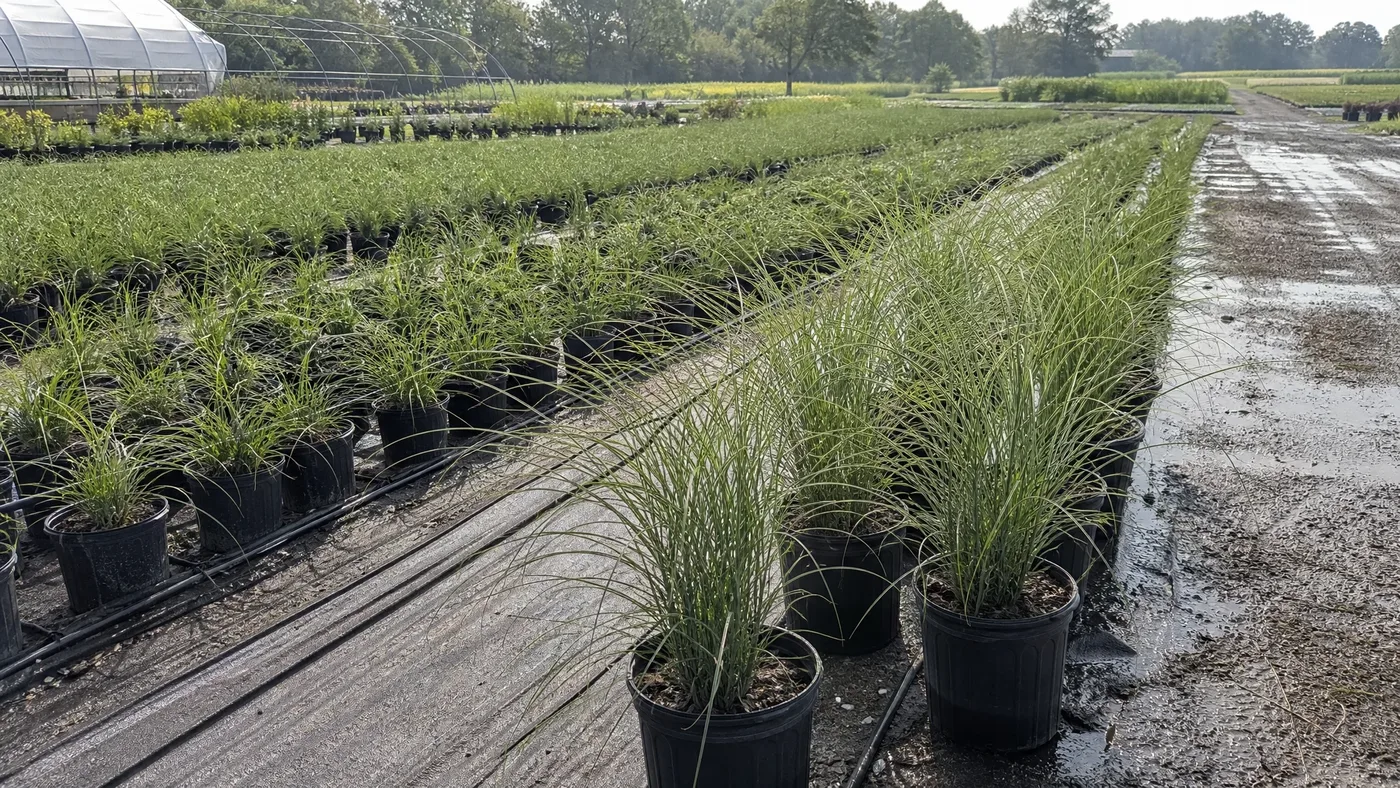
Picture three tags on one nursery bench. One says maiden grass, one says Japanese silver grass, one says Chinese silver grass, and the pots hold the same arching leaves at the same height. Most buyers suspect three plants and three price points, and start working out which one to budget for.
Miscanthus sinensis comes from Asia, and a plant with a range that wide picks up a new name in every catalog it passes through. Sorting the names matters because a wrong guess costs real money and real years. You can overpay for a label that sounds rarer, or pass over the exact plant you wanted. Read on for the botanical record, the origin claim built into the name, the synonyms in plain language, the habits behind nursery tags, and what a cultivar name does to price and waiting time.
Maiden Grass Is a Plant of Its Own
It is not. The botanical record puts maiden grass and Chinese silver grass on the same line, and one source is enough to show it.
What the Botanical Record Says
Start with the species entry, since every common name hangs off it.
Maidengrass is Miscanthus sinensis, a deciduous perennial ornamental grass in the grass family, Poaceae, native to Asia. It grows as a clump, 4 to 6 feet wide and 4 to 12 feet tall at maturity, with arching leaves.
Those figures describe the whole species. That is the first thing a planner should notice. The range is wide, so a bare species name on a tag tells you little about the plant you will actually carry home.
Species Name and Cultivar Name
Two levels of naming are in play, and mixing them up is where most of the confusion starts.
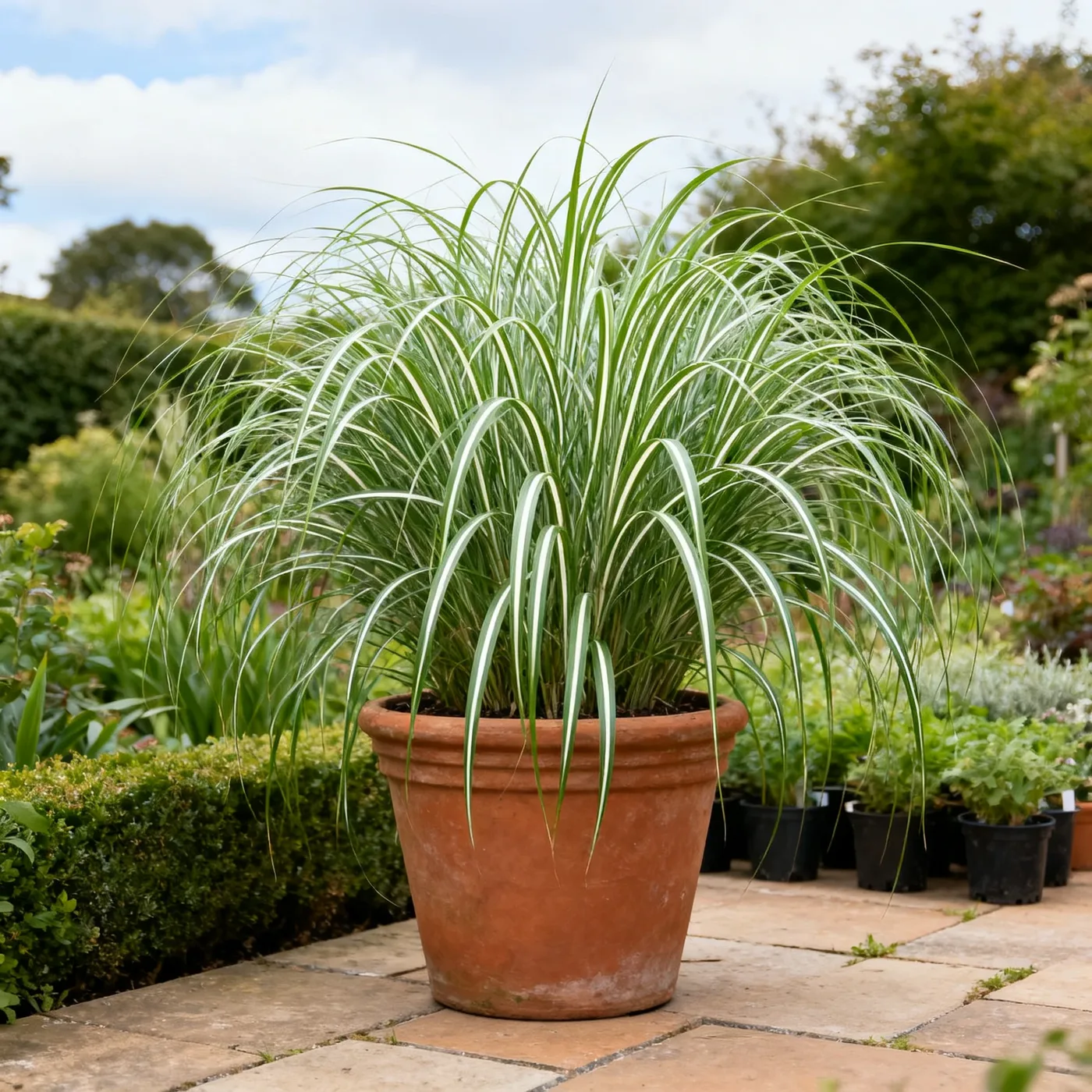
'Gracillimus' is a cultivar of the species. So 'Gracillimus' is not a rival to maiden grass. It is one named selection inside it, with slender, narrow, weeping leaves of medium green and a low seed set. That is a tidier and more predictable plant than the species at large.
What we tell customers is to read "maiden grass" as the family surname and 'Gracillimus' as the first name. A tag that gives only the surname leaves you guessing about size, hardiness and how fast the clump fills its spot. A tag that gives both lets you plan the bed, the budget and the years ahead before you pay.
Japanese Silver Grass Grows Only in Japan
The country in a common name is a claim about origin, so test it against the native range the sources give.
What the Sources Say About Origin
The sources we rely on name a continent, not a country.
NC State says the species is native to Asia. The USDA Forest Service says the same in plain words: Chinese silvergrass is native to Asia. Neither source narrows the range to Japan, and neither gives Japan as the only home.
A country in a common name is a catalog habit, not a range map. For exact countries, ask a botanical database or your local extension service.
Origin Does Not Set Your Hardiness
Where the plant comes from matters less to you than the winter it will face in your yard.
The species sheets run from zone 4 to zone 9, while the cultivar sheet from UF/IFAS gives zones 6 through 9 for 'Gracillimus'. That two-zone gap is the number to plan around, not any country on the tag.
If you garden in zone 5 or colder, check with your extension service before you buy the cultivar. Our hardiness zone guide goes through the range in detail.
What the Name Cannot Tell You
Three working facts are worth more than any origin story, and none of them appears on a tag.
'Gracillimus' grows in full sun, and the species wants six or more hours of direct light a day. The cultivar is quite drought tolerant.
It is fine in acid, alkaline or neutral soil, in chalk, clay, loam or sand, as long as drainage is decent. Plant it in a sunny, open spot and it asks for very little else.
Chinese Silver Grass Is a Different Species Altogether
This is the belief that brings most buyers to us, and it has the shortest answer: no.
Two Agencies, One Cultivar
One of the most common questions we get is whether the Chinese version is the real one and maiden grass the knockoff. Government sources settle it.
The USDA Forest Service uses "Chinese silvergrass" as its name for Miscanthus sinensis, writing it as one word. It also calls 'Gracillimus' a Chinese silvergrass cultivar.
NC State uses "maidengrass" for the same species and lists the same cultivar. Two agencies, two common names, one species, one cultivar. Whether the name is spelled as one word or two changes nothing.
What the Latin Epithet Tells You
The second word of the botanical name explains the Chinese label without making the plant a separate species.
The epithet sinensis is Latin for "of China", which is where "Chinese silver grass" gets its wording. It fits the name, and it does not fence the plant into one country, as the native range above shows. It is a label, not a boundary.
One tip that circulates is to pick whichever name sounds hardiest. Names carry no hardiness. Zones do, and the cultivar sheet says 6 through 9.
Synonyms of Chinese Silver Grass Spelled Out Plainly
Here is every name we have seen in the sources and on tags, sorted by what it actually is.
The Names in One Table
Read across each row to see which names point at the species and which point at the cultivar.
| Name on the tag | What it is |
|---|---|
| Miscanthus sinensis | The botanical species name, also used by the Forest Service |
| Maiden grass, maidengrass | A common name for the species |
| Chinese silver grass, Chinese silvergrass | A common name for the same species |
| Japanese silver grass | A trade common name for the same species |
| Miscanthus sinensis 'Gracillimus' | The cultivar, listed under both of the common names above |
How a Cultivar Name Is Written
The punctuation on a tag carries meaning, and it is worth a minute to read it.
The genus, Miscanthus, takes a capital. The species, sinensis, takes lowercase. A cultivar goes in single quotes and plain type, as in 'Gracillimus'. Quotes mean a named selection, so the plant behind them is more defined than the species alone.
If a tag shows a Latin name other than Miscanthus sinensis, check it against a botanical database or your extension service before you assume it is a different plant. Another cultivar entirely, such as 'Morning Light', has its own habits, which we compare in Gracillimus against Morning Light.
Why Nurseries Label Chinese Silver Grass Three Ways
The three-name bench has a practical cause, and it is closer to habit than to deception.
How Tags Pick Up Their Names
Plants reach a retail bench through growers, wholesalers and catalog writers, and each one tends to keep the name its own customers search for.
A buyer in one region asks for maiden grass, a buyer in another asks for silver grass, and the tag follows the question. We often see the common name shift between the wholesale list and the retail tag while the Latin name stays put. That is why the Latin name is the only line you can compare across stores.
What Different Labels Mean for Shoppers
For you, the labeling habit changes one thing: the common name is not a price signal.
What sets the price is the size of the pot and how many seasons the plant spent growing to fill it. A larger container costs more because it holds a larger root mass, and that is true under every name. Our guide to container sizes shows what each pot gets you.
Compare like with like, meaning the same Latin name in the same pot size, and the three tags will usually look much closer in price than you feared.
Tag Checklist Before You Buy
Run through these four points at the bench, and the naming question disappears.
- Find the Latin name first and ignore the common name until you have read it.
- Look for a name in single quotes after Miscanthus sinensis, because that is the cultivar.
- Check the hardiness zone printed on the tag against your own, and remember the cultivar sheet says 6 through 9.
- Compare pot sizes before you compare prices.
Cultivar Names Change What You Pay and Wait For
The common name does not move your budget, but the cultivar does, mostly through size and speed.
Species Against Cultivar in Numbers
The table sets the species figures beside the cultivar figures from the extension sheets.
| Trait | Species, Miscanthus sinensis | 'Gracillimus' |
|---|---|---|
| Hardiness | Zones 4 through 9 | Zones 6 through 9 |
| Height | 4 to 12 feet | 5 to 6 feet |
| Spread | 4 to 6 feet | 5 to 10 feet |
| Growth rate | Medium | Fast |
The cultivar height and spread come from the same cultivar sheet, and the cultivar has an upright habit at 5 to 8 feet.
Check the climate behind any figure. Under UK conditions the maximum height is about 3 to 5 feet, which is lower than the US sheets.
Budgeting Space and Years
Read the spread row first, because it drives the budget more than the price tag does.
A spread of 5 to 10 feet means one clump claims a large patch, so buy fewer plants than you think and leave the room. A fast grower also shortens the wait for full size, though the sources give no number of years, so ask your extension service for local timing.
Our guide to size and growth rate covers how the clump fills out. In our rows, a bigger pot costs more because it spent more seasons growing, whatever the tag says.
Which Tag We Would Choose
If we were choosing at the bench, we would take the tag that names 'Gracillimus' every time.
It narrows the height to a stated range, the leaves are slender and weeping, and it blooms in fall with pink flowers. We would choose the plain species only for a zone 4 or 5 garden, or where a wide, loose range of sizes does not bother you, and even then we would check local hardiness first.
Buying Chinese Silver Grass Under Any Name
Maiden grass, Japanese silver grass and Chinese silver grass are three names for one species. Choose by Latin name, zone, and container size, and ignore the spelling on the common name. Budget for the cultivar's real spread, since it is the figure most buyers underestimate. For a fuller picture of the plant once it is home, our care guide picks up where this one stops.
Chinese Silver Grass
Nursery-grown Chinese Silver Grass in sizes from 1 Gallon, shipped to your door.
From $33.97
Shop Now →The line to carry to any bench is Miscanthus sinensis 'Gracillimus', written exactly that way. If a tag shows that line, you are holding the plant described here, whatever else the label says. Our growers watch the clumps through the year, from new green leaves in spring to the pink plumes of late summer and fall, and we grow and sell top-quality grasses on our own farms.